Curieuse Island Seychelles – Giant Tortoises, Trails and How to Visit
Oct 26, 2026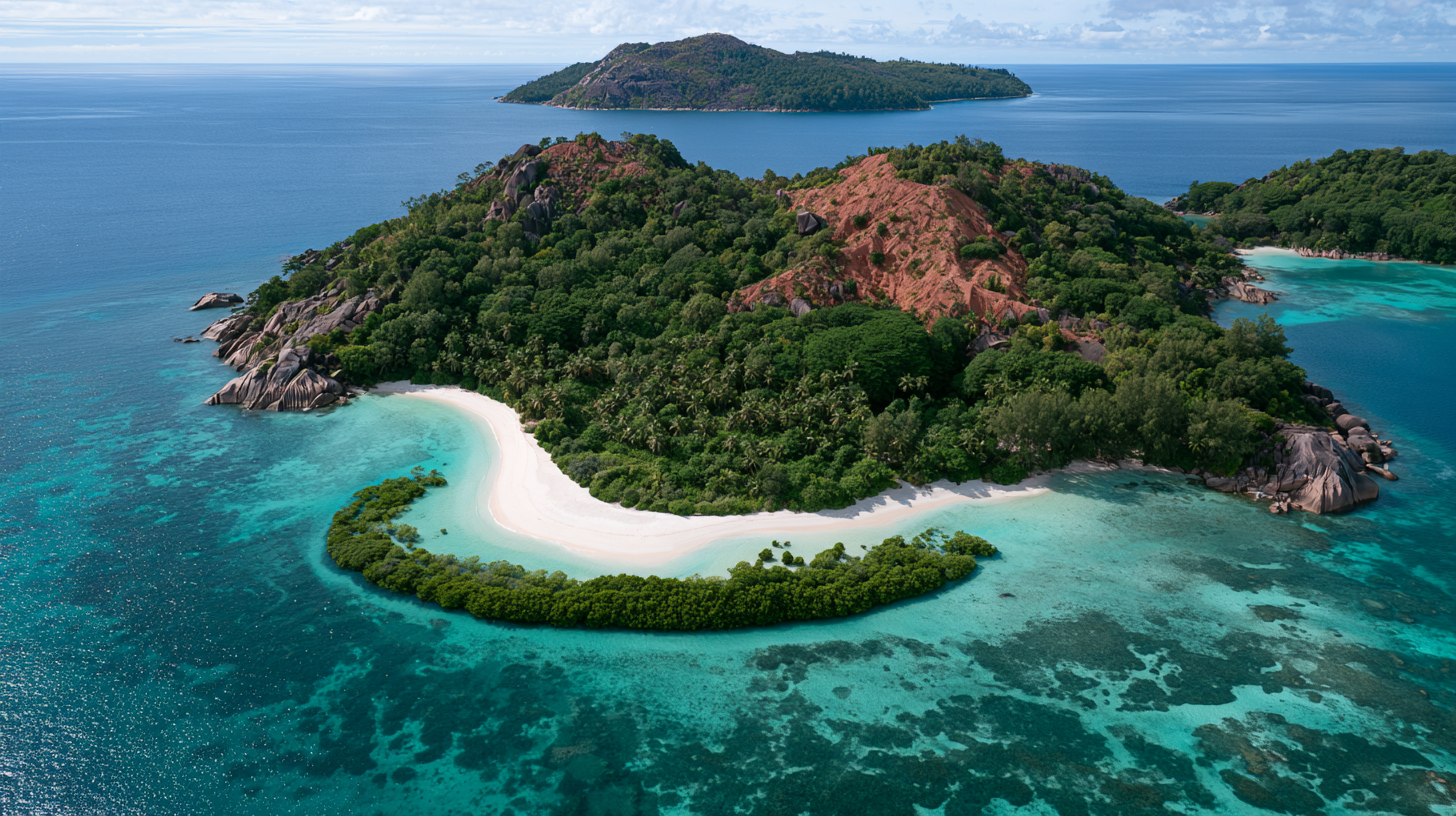
Curieuse Island is a granite island of 1.13 square miles (2.93 km²) in the Seychelles, lying about 1.2 miles (2 km) off the northeast coast of Praslin. The entire island, together with the channel separating it from Praslin, forms Curieuse Marine National Park, established on June 11, 1979.
Curieuse is known for four things. Hundreds of Aldabra giant tortoises roam it freely. Coco de mer palms grow here in the wild, which happens in only one other place on Earth. A boardwalk crosses a mangrove swamp. The ruins of a leper colony that operated for close to a century still stand on the shore.
The island has no hotels, roads, or village. Only park rangers live on it, the park opens daily from 9 a.m. to 5 p.m., and every visitor arrives by boat for a few hours. Most travelers come on group excursions from Praslin, while others make Curieuse a stop on a private yacht route through the Inner Islands.
Curieuse Island at a Glance
The table below collects the core facts about Curieuse in one place, drawn from the park authority and the island's published geography.
| Parameter | Detail |
|---|---|
| Location | Inner Islands, Seychelles, north of Praslin |
| Area | 1.13 sq mi (2.93 km²) |
| Length and width | 2.2 mi by 1 mi (3.6 km by 1.6 km) |
| Highest point | Mont Curieuse, 564 ft (172 m) |
| Distance from Praslin | About 1.2 mi (2 km) |
| Boat time from Côte d'Or, Praslin | About 20 minutes |
| Protected status | Curieuse Marine National Park since 1979 |
| Managing body | Seychelles Parks and Gardens Authority |
| Opening hours | 9 a.m. to 5 p.m., seven days a week |
| Residents | Park rangers only |
| Signature species | Aldabra giant tortoise, coco de mer palm, hawksbill turtle |
| Main landing points | Baie Laraie and Anse José |
What Curieuse Island Is Known For
Curieuse packs tortoises, rare palms, mangroves, and sculpted granite into an island smaller than many city parks. Each of these draws a different kind of visitor, and most day trips cover all four.
Aldabra Giant Tortoises
Curieuse is home to more than 300 Aldabra giant tortoises, the largest free-roaming tortoise population in the Inner Islands. A conservation program moved them here from Aldabra Atoll between 1978 and 1982, replacing a native tortoise population that early settlers had wiped out.
Many tortoises gather around the ranger station at Baie Laraie, where visitors meet them within minutes of landing. Others wander the beaches, the forest edge, and the trail to Anse José, so encounters continue throughout the walk.
The park runs a tortoise nursery as part of its breeding program. Hatchlings stay in protected pens until they reach five years of age, then join the wild population on the island.
Aldabra giant tortoises rank among the largest tortoises in the world. Adult males commonly exceed 400 pounds, and the species lives well past 100 years, which means some of the animals introduced in the late 1970s may outlive the visitors photographing them today.
Coco de Mer Palms and Endemic Plants
Curieuse is one of only two places where the coco de mer palm grows naturally, the other being neighboring Praslin. The palm produces the largest seed of any plant, a double-lobed nut that has become a national symbol of the Seychelles.
On Curieuse, coco de mer palms cling to the rocky slopes of the central hill, rooted in eroded red soil that supports sparse shrubs and palms. A fire in 1967 destroyed more than 150 of them, and the surviving stands are now strictly protected.
The island also hosts plants found almost nowhere else. Lalyann dile (Secamone schimperiana) grows naturally only on Curieuse, in the intermediate forest between the lowlands and the summit. Takamaka trees dominate the native forest behind the west coast, and bois chandelle and bwa bannann appear among the endemic species.
Mangroves and the Boardwalk
The mangrove swamp bordering Baie Laraie contains six of the seven mangrove species recorded in the Seychelles. This concentration makes it one of the most complete mangrove habitats a visitor can walk through in the archipelago.
A wooden boardwalk raised on pilings runs through the swamp, keeping the route passable even at high tide. Along it, walkers spot crabs, sea snails, skinks, geckos, and wading birds among the roots.
Red Granite and the Old Name Île Rouge
Explorer Lazare Picault first called the island Île Rouge, after the red laterite soil that still colors its hillsides. In 1768 the French claimed it and renamed it after the schooner La Curieuse, part of the expedition led by Marc-Joseph Marion du Fresne.
The coastline displays red and blue granite shaped over millions of years. Wind and water have carved boulders into rounded forms and natural archways, especially along the shores facing the open sea.
History of Curieuse Island – Leper Colony to National Park
Curieuse owes much of its untouched state to a past that kept people away. For more than a century the island served as a place of isolation, and that isolation later made it a natural candidate for protection.
The Leper Colony and the Doctor's House
From the first half of the 19th century until 1965, Curieuse served as a quarantine station for people with leprosy. The ruins of the leprosarium remain on the shore at Anse José, a reminder of a long and painful chapter in Seychelles history.
The Doctor's House at Anse José was built in 1873 by Dr. William MacGregor in French colonial style. It later served as a museum and an education center on the island's history, flora, and fauna. The park authority lists the building as closed for renovation, so visitors should confirm its status before planning around it.
The Turtle Pond Causeway
In the early 1900s, when private individuals administered Curieuse, a seawall was built across Baie Laraie. It enclosed a 40-acre pond for hawksbill turtles, the first aquaculture farm in the Seychelles.
The project failed and was abandoned, but the causeway stayed in use as a footpath linking Baie Laraie and Anse José. The December 2004 tsunami destroyed sections of the wall, and its remains now serve as a landmark where young turtles gather during the nesting season.
Fire, Restoration and Protection
The 1967 fire burned large parts of the island's vegetation. After it, the government took ownership of Curieuse and began restoration and conservation work that continues today.
In 1979 the island and its surrounding waters became Curieuse Marine National Park. The park boundaries cover the whole of Curieuse, the channel to Praslin, and the islets of St. Pierre and Chauve Souris, with the Praslin shoreline forming the southern edge.
How to Get to Curieuse Island
Curieuse has no airstrip and no ferry service, so every visit begins on a boat. The choice comes down to two formats, a shared group excursion from Praslin or a private yacht that includes Curieuse in its route.
Group Boat Excursions from Praslin
Group trips depart from the beaches of Côte d'Or and Anse Volbert on Praslin's northeast coast. The crossing takes about 20 minutes, and boats usually land at Baie Laraie or Anse José.
A typical program combines a Curieuse landing, the tortoise station, the boardwalk walk, and a snorkeling stop at St. Pierre. The schedule, the time on each island, and the group size are fixed by the tour, and departures follow a set timetable.
Travelers based on Mahé need to reach Praslin first, by ferry or domestic flight, before joining a group trip. That makes a Curieuse day from Mahé a long sequence of transfers.
Private Yacht Charter
A private yacht reaches Curieuse without the transfer to Praslin. The boat anchors or moors inside the marine park according to park rules, and guests go ashore by tender at the landing points.
CharterClick operates crewed Lagoon catamarans and Azimut motor yachts from Eden Island Marina on Mahé. Praslin lies about 28 miles (45 km) northeast of Mahé, so most yacht itineraries place Curieuse on a multi-day route rather than a single day out of Eden Island.
The yacht format changes the rhythm of the visit. Landing times shift to avoid the busiest excursion hours, the route can add Anse Lazio or La Digue the same day, and the group never shares the deck with other travelers.
Group Excursion vs Private Yacht
The comparison below shows how the two formats differ for a Curieuse visit.
| Factor | Group excursion | Private yacht |
|---|---|---|
| Departure point | Côte d'Or or Anse Volbert, Praslin | Eden Island Marina, Mahé, or an anchorage near Praslin on a multi-day route |
| Who is on board | Shared with other travelers | One group only |
| Schedule | Fixed departure and return times | Set with the captain |
| Time on Curieuse | Set by the tour program | Flexible within park hours |
| Additional stops | Usually St. Pierre | St. Pierre, Anse Lazio, La Digue, overnight anchorages |
| Transfer from Mahé | Ferry or flight to Praslin needed | Not needed |
| Suits | Travelers staying on Praslin for one day out | Travelers covering several islands in one trip |
What to Do on Curieuse Island
Activities on Curieuse center on walking, wildlife, and the water around the island. The park authority maintains marked trails, and the marine park protects the reefs offshore.
Baie Laraie to Anse José Trail
The main trail links the two landing points, running roughly 1 mile (1.5 km) from Baie Laraie across the mangrove boardwalk to Anse José. Most walkers take 30 to 45 minutes one way, with longer stops for tortoises and photographs.
The route passes the ranger station, the tortoise nursery, the mangrove swamp, and the remains of the old causeway. It ends at the Doctor's House and the leprosarium ruins, so a single walk covers the island's nature and history.
Anse Badamier Trail
The Anse Badamier trail leads to a quieter bay away from the main landing area. It suits visitors with extra time who want coastal forest and granite scenery without the excursion crowds.
Sea Turtle Nesting Trail
Curieuse hosts a large hawksbill turtle rookery, and nesting sea turtles return to its beaches every year. The park opens a seasonal Nesting Sea Turtle Trail from October to early March.
The trail runs under park control and carries a separate trail fee. Hawksbills in the Seychelles often come ashore during daylight, which gives day visitors a real chance of seeing a nesting female or fresh tracks on the sand.
Snorkeling and Diving at Pointe Rouge and Coral Gardens
The reefs around Curieuse sit inside the marine park and remain among the healthier sites near Praslin. Pointe Rouge and the Coral Gardens off the east coast are the best-known spots, with reef fish, corals, and frequent turtle sightings.
These sites appear on many lists of Inner Islands dive sites. Snorkelers find shallower coral close to the landing beaches, while divers reach the deeper sections offshore.
St. Pierre Islet Nearby
St. Pierre is a granite islet topped with palms, about five minutes by boat from Curieuse and inside the same marine park. It offers some of the clearest snorkeling water in the area.
Visitors who step ashore on St. Pierre meet Wright's skinks and nesting seabirds. Most Curieuse itineraries, group or private, include St. Pierre as the snorkeling stop.
Best Time to Visit Curieuse Island
Curieuse is open year-round, but sea conditions and wildlife activity vary by season. The calendar below covers both factors.
Monsoon Seasons and Sea Conditions
The transition months of April to May and October to November bring the lightest winds, the calmest crossings, and the clearest water for snorkeling. These months suit both group trips and yacht routes.
The southeast trade winds blow from roughly May to September. They cool the air and dry the weather but raise swell in open water, which affects longer crossings from Mahé more than the short hop from Praslin. Details for the start of the calm window appear in the October weather guide.
The northwest monsoon runs from December to March. It brings higher humidity, warmer water, and short heavy showers, while the sea often stays workable for island hopping.
Turtle Nesting Season
Hawksbill nesting on Curieuse runs from October to early March, matching the period when the nesting trail opens. During this window, hatchlings also gather outside the remains of the causeway at Baie Laraie.
Travelers who prioritize turtles should plan within these months. Those focused on tortoises can visit at any time, since the tortoises live on the island year-round.
Curieuse Marine National Park Rules
Curieuse is a protected area, and park rules apply on land and in the water. Rangers enforce them, and the entry fee funds the conservation work that keeps the island in its current state.
- Visitors pay the park entry fee on arrival, with a separate fee for the turtle nesting trail
- Fishing is not permitted inside the marine park
- Coral, shells, plants, and coco de mer nuts stay where they are found
- Tortoises are observed and photographed, never ridden, sat on, or fed outside food
- Turtle nesting beaches are entered only on the controlled trail
- Boats use moorings where provided and anchor on sand, clear of coral
- All visitors leave the island by the 5 p.m. closing time
- Waste leaves the island with the people who brought it
Coco de mer nuts may only be taken home when bought from licensed sellers with an export permit. The Coco Curieuse Boutique at Baie Laraie sells certified nuts on the island.
Planning a Day on Curieuse Island
A Curieuse visit fits into half a day, though most travelers combine it with St. Pierre and a beach stop to fill a full day. Planning around the park hours and the tide keeps the day unhurried.
Suggested Timing
Arriving between 9 and 10 a.m. puts visitors at the tortoise station before the island gets busy. Two hours cover the tortoises, the nursery, the boardwalk, and the walk to Anse José at an easy pace.
Midday works for a lunch break on the beach at Baie Laraie, where barbecues are permitted. Lunch is organized separately from the boat transfer, whether on a group trip or a private charter.
The afternoon suits snorkeling at St. Pierre, when the sun sits high and the water shows its color. Boats need to clear the island before the 5 p.m. closing.
Curieuse on a Multi-Day Yacht Route
A multi-day CharterClick charter can place Curieuse on the second day of a route out of Eden Island. The first day covers the run to Praslin and an anchorage for the night, the second day goes to Curieuse and St. Pierre, and the following days continue to La Digue and Anse Source d'Argent before the return to Mahé.
Waking at anchor near Curieuse gives the earliest possible landing, ahead of the excursion boats from Praslin. More route options for the Inner Islands appear in the sailing routes overview.
What to Bring
Curieuse has no shops beyond the boutique at Baie Laraie, so visitors carry what they need for the day.
- Drinking water for the trail, which has little shade in places
- Reef-safe sunscreen and a hat
- Walking sandals or light shoes for the boardwalk and rocky paths
- Insect repellent for the mangrove section
- Mask and snorkel for St. Pierre and the reefs near the beaches
- A dry bag for phones and cameras during tender landings
- Local currency for park fees and the boutique
Is Curieuse Island Worth Visiting
Curieuse is worth visiting for travelers interested in wildlife, conservation, and Seychelles history. Nowhere else in the Inner Islands combines free-roaming giant tortoises, wild coco de mer palms, a complete mangrove habitat, and a protected reef within a 20-minute boat ride of a major island.
The island suits families, photographers, and snorkelers best. Children meet the tortoises at close range, the trail stays short and level along the boardwalk, and St. Pierre adds a reef stop without a long crossing.
Curieuse suits travelers seeking a full resort beach day less well. The island has no sunbeds, restaurants, or overnight stays, and visits end at 5 p.m., so it works best as one stop within a broader island-hopping day.
Frequently Asked Questions About Curieuse Island
What is Curieuse Island known for
Curieuse Island is known for more than 300 free-roaming Aldabra giant tortoises, wild coco de mer palms, a mangrove boardwalk with six of the seven Seychelles mangrove species, and the ruins of a former leper colony. The island and its waters form Curieuse Marine National Park.
Is Curieuse Island worth visiting
Yes, for travelers interested in wildlife and nature. Curieuse offers close encounters with giant tortoises, rare palms, mangroves, and protected reefs in a half-day visit. It has no resort facilities, so it works best combined with St. Pierre or another beach stop.
Is there an entrance fee for Curieuse Island
Yes. Visitors pay a park entry fee to the Seychelles Parks and Gardens Authority, which manages the island, and the fee funds conservation and ranger work. The seasonal turtle nesting trail carries a separate fee. Current rates are published by the park authority.
Is there a day trip to Curieuse Island
Yes. Group day trips leave from Côte d'Or and Anse Volbert on Praslin and usually include St. Pierre for snorkeling. Private yachts also include Curieuse on Inner Islands routes, most often as part of a multi-day charter from Mahé.
How far is Curieuse Island from Praslin
Curieuse lies about 1.2 miles (2 km) off the northeast coast of Praslin. The boat ride from Côte d'Or takes about 20 minutes.
How many giant tortoises live on Curieuse Island
More than 300 Aldabra giant tortoises live on Curieuse. They were introduced from Aldabra Atoll between 1978 and 1982, and a nursery on the island raises young tortoises until they are five years old.
What are the opening hours of Curieuse Island
Curieuse Marine National Park is open seven days a week from 9 a.m. to 5 p.m. Overnight stays on the island are not available.
Can a private yacht visit Curieuse Island
Yes. Private yachts enter the marine park, anchor or moor according to park rules, and land guests by tender at Baie Laraie or Anse José. CharterClick yachts reach Curieuse from Eden Island Marina on Mahé, usually as one stop on a multi-day Inner Islands route.
When is the best time to see turtles on Curieuse Island
Hawksbill turtles nest on Curieuse from October to early March. During this period the park opens a controlled nesting trail, and hatchlings gather near the old causeway at Baie Laraie.