Sailing in Seychelles - Routes, Seasons, and Charter Options
Jun 4, 2026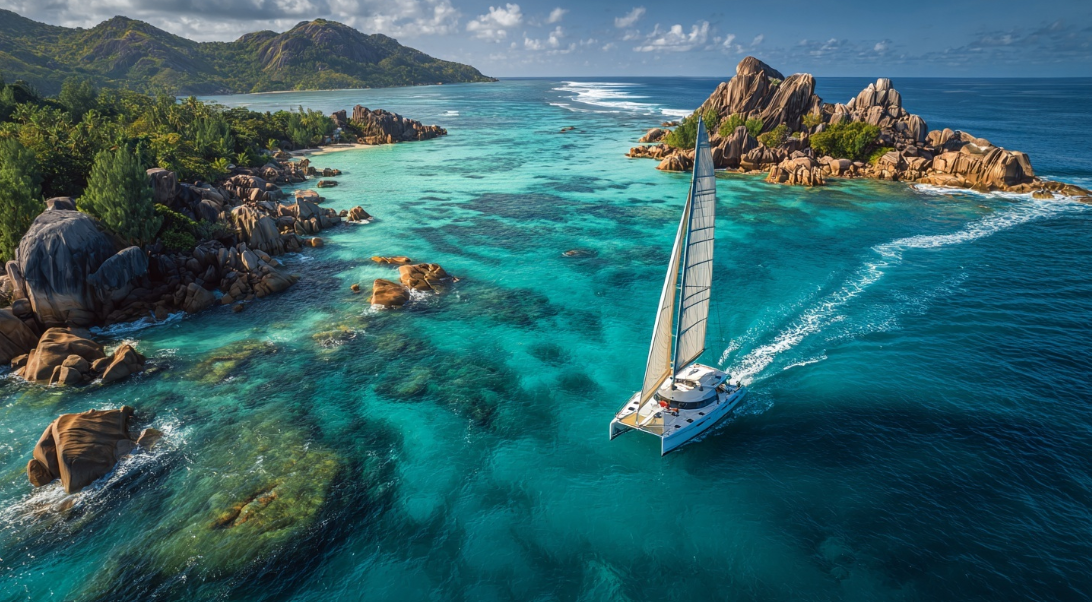
Seychelles is an archipelago of 115 islands in the Indian Ocean, located about 1,000 miles off the east coast of Africa, with year-round sailing conditions. The sailing season splits into two wind windows: November to April brings mild northwest winds suitable for all experience levels, while May to October brings stronger southeast trade winds better suited to experienced crews. Most sailing trips run 7 to 10 days and start from either Mahé or Praslin, the two main charter bases. A 7-day trip covers the core Inner Islands of Praslin, La Digue, and Curieuse, while a 10-day trip adds more remote stops. Yachts can be arranged as a bareboat (self-skippered) or as a crewed charter with a skipper on board; bareboat sailing requires a valid license, while a crewed charter does not.
What Sailing in Seychelles Involves
Sailing in Seychelles means cruising between closely spaced tropical islands across two distinct island groups. The Inner Islands are granitic and include the main hubs of Mahé, Praslin, and La Digue; the Outer Islands are low-lying coral atolls spread across a much wider area. Nearly all recreational sailing takes place in the Inner Islands.
The Inner Islands form a compact cruising ground where most passages between anchorages are only a few nautical miles long. Short distances mean crews spend more time at anchor and less time on long crossings, and many legs take one to three hours rather than a full day.
The waters around the Inner Islands offer protected anchorages, consistent trade winds, and warm water throughout the year. These conditions make the area accessible to a wide range of crews, from first-time visitors sailing with a skipper to experienced sailors handling a bareboat.
What distinguishes Seychelles from many other charter destinations is the combination of short hops, year-round warm water, and uncrowded anchorages. Crossings are rarely demanding within the Inner Islands, making the region well-suited to relaxed island-hopping rather than open-water passage sailing.
The Outer Islands are a separate proposition. They sit far from the main hubs, have few facilities, and require longer passages and more planning, so they are generally reserved for experienced sailors on extended trips.
Best Time to Sail Seychelles
Seychelles is sailable year-round, but conditions divide into two wind windows, and the window you choose determines the difficulty of the sailing and the type of crew it suits.
The November to April window brings mild northwest monsoon winds, typically light to moderate. This period suits all experience levels, including first-time visitors and families, because the winds are gentle and the seas are calm. It also coincides with the wetter season, when short, heavy rain showers are common but usually brief.
The May to October window brings stronger southeast trade winds, often in the 15 to 25 knot range. This period suits experienced sailors who are comfortable with more wind and choppier conditions. It is the drier season, with less rain and fewer tourists, which means quieter anchorages.
April and November are transitional months between the two monsoons and tend to bring the calmest, lightest winds of the year. These months are often the best choice for crews who want flat water and minimal wind.
Season also affects underwater activities. Calmer months produce better water clarity and visibility for snorkeling and diving, while windier months create more surface chop that can reduce visibility at exposed sites.
Sailing Routes and What You Can See in Each
Most Seychelles itineraries are built around the Inner Islands triangle of Mahé, Praslin, and La Digue, where passages are short, and the length of the trip determines how many islands you can reach. A 7-day trip covers the core Inner Islands, a 10-day trip adds more remote stops, and the Outer Islands require a dedicated extended charter.
The route you can realistically sail depends on your starting base and the number of days available, so the itineraries below are organized by trip length and by what each one allows you to visit.
Classic 7-Day Inner Islands Route
A 7-day route covers the main Inner Islands with short daily passages and time at anchor. Over a week, you can see the central granitic islands and their best-known anchorages without rushing.
- Day 1: Embark at Praslin (Baie Ste Anne) and settle in near the marina.
- Day 2: Sail to Curieuse (about 5 miles) to see giant Aldabra tortoises and the marine park.
- Day 3: Sail to Cousin Island and on to Anse Lazio on Praslin (about 9 miles) for snorkeling and beach time.
- Day 4: Cross to La Digue to visit Anse Source d'Argent and explore the island by bicycle.
- Day 5: Sail to the Cocos, Félicité, and Marianne islands (about 13 miles) for some of the best snorkeling in the group.
- Day 6: Sail to Grande Soeur and back toward Ste Anne (about 11 miles).
- Day 7: Return to Praslin and disembark.
In a week, this route lets you visit Praslin, La Digue, Curieuse, Cousin, and the small islands around them, covering tortoise reserves, a UNESCO nature site, and the most photographed beaches in the archipelago.
Extended 10-Day Route
A 10-day route adds outer Inner Islands and more remote anchorages to the classic loop. The extra days let you reach stops that a 7-day trip cannot fit.
This route typically starts at Mahé, overnights at quieter bays such as Anse Major or Silhouette Island, then follows the standard Praslin–La Digue circuit before adding islands like Bird Island or additional anchorages around Mahé on the return.
Over ten days, you can see everything on the 7-day route plus Silhouette Island, additional Mahé anchorages, and a seabird island such as Bird Island, giving a fuller picture of both the central and northern Inner Islands.
Outer Islands Route
The Outer Islands route covers the coral atolls of Alphonse, Farquhar, and the Amirantes, far from the main hubs. It involves long open-water passages and minimal facilities.
This route is suited only to experienced crews on extended charters. It trades the convenience of the Inner Islands for remote coral atolls, untouched reefs, and anchorages that very few visitors reach.
Choosing a Start Base: Mahé or Praslin
The start base affects how much of the first and last day is spent transiting. Starting from Praslin puts you closer to the core La Digue and Curieuse anchorages, saving sailing time on a short trip. Starting from Mahé adds an initial crossing but suits longer itineraries and connects directly to international flights.
Charter Options - Bareboat and Crewed
A charter is the arrangement of a yacht for your trip, and in Seychelles, it is available either as a bareboat or as a crewed boat with a skipper. The main practical difference is whether you sail the boat yourself or have it handled for you.
A bareboat charter is a yacht rented without crew, where you skipper the boat yourself. It is available to experienced sailors who hold a valid license.
A crewed charter is a yacht that comes with a professional skipper on board. It is available to unlicensed crews and to anyone who prefers not to manage the boat themselves.
Both options are available in Seychelles, including through local charter operators such as CharterClick, which has bases on Mahé and Praslin. Which one fits depends mainly on whether you hold a sailing license and want to navigate yourself.
License and Sailing Requirements
A bareboat charter in Seychelles requires a valid sailing license and a nautical CV; a crewed charter requires neither, because the professional skipper holds the necessary qualifications.
A nautical CV is a written summary of your sailing experience, listing the boats you have handled, the areas you have sailed, and the conditions you are competent in. It is used alongside your license to confirm you can manage a bareboat in local conditions.
A cruising permit is the authorization required to sail in Seychelles waters, and it is normally arranged through the charter operator before departure.
Several marine reserves restrict access to protect wildlife. Some require an authorized guide or ranger on board, and certain zones are closed to anchoring or landing, so crews confirm current rules before entering a reserve.
Activities and Things to Do While Sailing
Activities in Seychelles are tied to anchorages and fall into three categories: underwater, shore-based, and wildlife. Each island stop offers a different mix, and the boat serves as the base for reaching them.
Snorkeling and diving are the main underwater activities, with coral reefs, reef fish, and sea turtles found around sites such as the Cocos Islands, Curieuse, and Sainte Anne Marine Park. Water clarity is best in the calmer months.
Wildlife viewing centers on protected reserves. Curieuse and Aldabra are known for giant tortoises, while Cousin and Bird islands are seabird reserves with large nesting populations.
Beaches and anchorages are a shore-based draw, including Anse Source d'Argent on La Digue and Anse Lazio on Praslin. Many anchorages are quiet enough for a beach landing or a swim directly off the boat.
Fishing is permitted in some areas but restricted in marine reserves. Crews check local rules before fishing, as protected zones prohibit it entirely.
How to Get to Seychelles and Where Charters Start
Seychelles International Airport (SEZ) is on Mahé, and there are few direct long-haul flights, so most travelers arrive via a connection. Reaching Praslin from Mahé requires a short domestic flight or a ferry.
- Getting there: major carriers such as Emirates, Etihad, Qatar Airways, and Air Seychelles serve Mahé, usually with one connection from Europe, the Middle East, or Asia.
- Mahé to Praslin: a 15-minute domestic flight or a ferry of about one hour connects the two islands.
- Charter bases: the main bases are at Eden Island Marina on Mahé and at Baie Ste Anne on Praslin.
Match your start base to your arrival plan. Starting at Mahé works directly with international arrivals, while starting at Praslin requires an onward flight or ferry, but shortens the sailing distance to the core anchorages.
Allow a buffer between your flight arrival and the charter start. Charters often begin in the late afternoon, and arriving a day early avoids the risk of a delayed connection cutting into the trip.
Quick Decision Guide
- New to sailing or no license → choose a crewed charter.
- Hold a license and have experience → choose a bareboat charter.
- First trip with limited days → start from Praslin and sail the 7-day Inner Islands loop.
- Want to see Praslin, La Digue, and the tortoise reserves in one week → take the 7-day route.
- Have ten days and want Silhouette and the northern islands too → take the 10-day route.
- Want calm water and all-level conditions → sail between November and April.
- Want less rain, fewer crowds, and stronger wind → sail between May and October.
- Want the calmest possible conditions → sail in April or November.
- Experienced crew on an extended trip → consider the Outer Islands route.
Planning Your Seychelles Sailing Trip with CharterClick
Whichever route and season you choose, a Seychelles sailing trip is arranged through a charter operator that handles the boat, the cruising permit, and the base of operations. Operators such as CharterClick offer both bareboat and crewed yachts from Mahé and Praslin, allowing you to match the boat and starting point to the route and trip length you have in mind.
Frequently Asked Questions
Do I need a sailing license to sail in Seychelles?
You need a valid sailing license and a nautical CV to charter a bareboat. A crewed charter requires no license because the professional skipper holds the necessary qualifications.
How many days do I need for a sailing trip in Seychelles?
Seven to ten days is the recommended length. A 7-day trip covers the core Inner Islands of Praslin, La Digue, and Curieuse, while a 10-day trip adds more remote anchorages such as Silhouette and Bird Island.
What can I see on a 7-day route?
A 7-day route covers Praslin, La Digue, Curieuse, Cousin, and the small islands around them. It includes giant tortoise reserves, the Vallée de Mai UNESCO site on Praslin, and beaches such as Anse Source d'Argent and Anse Lazio.
When is the best time to sail to Seychelles?
The best time depends on the conditions you want. November to April brings mild winds suited to all levels, May to October brings stronger winds suited to experienced crews, and April and November offer the calmest water.
Can a beginner sail in Seychelles without a skipper?
A beginner cannot charter a bareboat, since bareboat rental requires a license and proven experience. Beginners sail with a crewed charter, which lets them enjoy the trip while a professional handles navigation.
Should I start from Mahé or Praslin?
Start from Mahé if you want to connect directly with international flights or sail a longer itinerary. Start from Praslin if you have a short trip and want to minimize sailing distance to La Digue and Curieuse.
Do I need a visa to visit Seychelles?
Seychelles does not require a visa for tourism. Visitors receive a visitor's permit on arrival, provided they have a valid passport, return ticket, proof of accommodation, and sufficient funds.
Is sailing in Seychelles safe for less experienced crews?
Sailing in the Inner Islands is manageable for less-experienced crews during the calmer November to April window, when winds are light and passages are short. The windier May to October season and the remote Outer Islands are better suited to experienced sailors.
Are there restricted areas for sailing in Seychelles?
Yes, several marine reserves restrict access to protect wildlife. Some require an authorized guide on board, and certain zones prohibit anchoring or landing, so crews confirm restrictions before entering a reserve.
Should I choose a bareboat or a crewed charter?
Choose a bareboat if you hold a license, have sailing experience, and want to navigate yourself. Choose a crewed charter if you do not hold a license, are new to the area, or prefer to sail without managing the boat.