Seychelles Turtles, Species, Nesting Seasons, and Where to See Them
Sep 15, 2026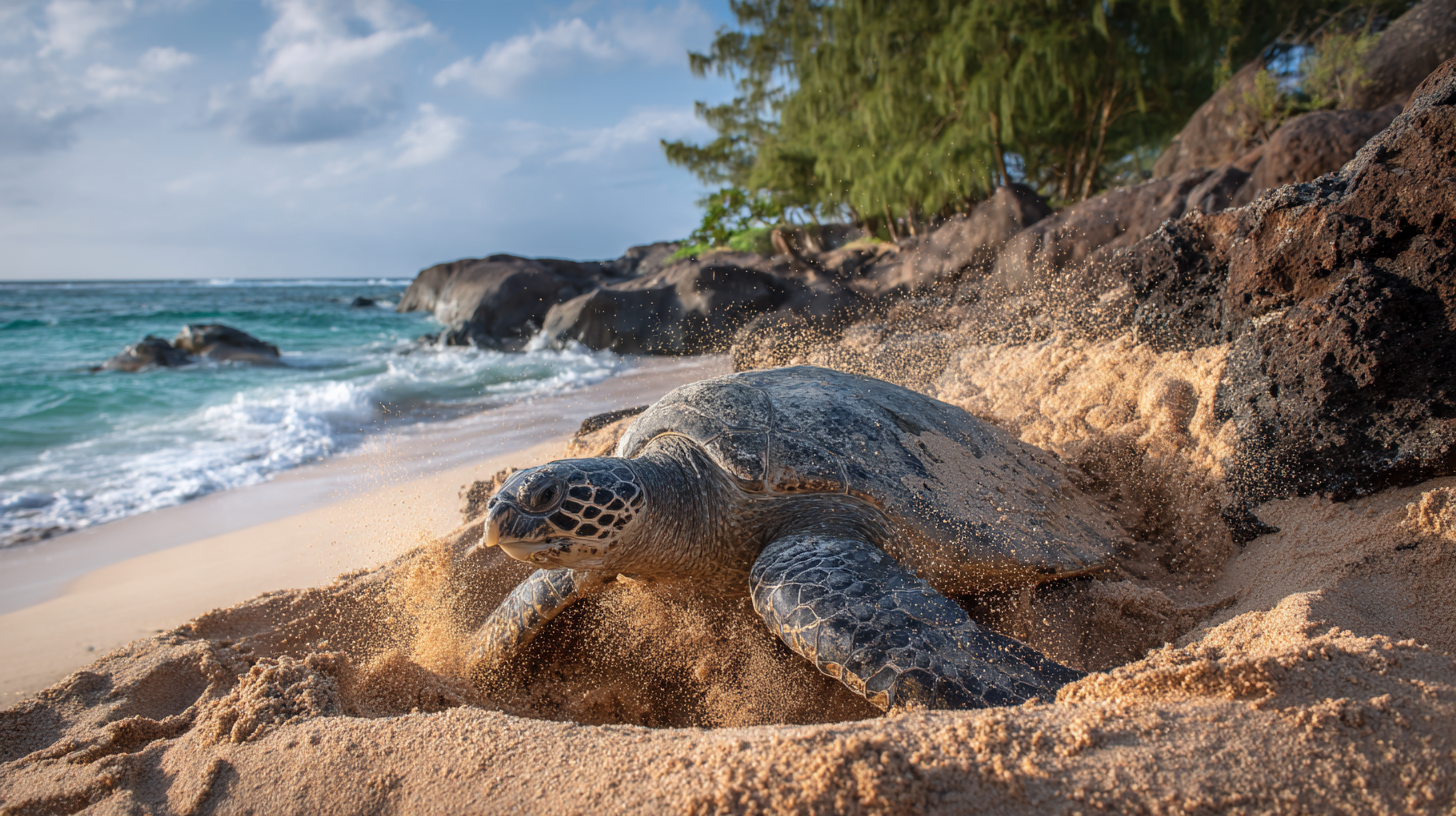
Seychelles waters host five of the world's seven sea turtle species, and two of them, the hawksbill and the green turtle, nest on the islands' beaches. Hawksbills favor the granitic inner islands, while green turtles nest mainly on remote outer atolls such as Aldabra.
Travelers also apply the word turtle to two other reptile groups. The Aldabra giant tortoise lives on land and roams several islands. Two freshwater terrapins survive in marshes and slow streams of the granitic islands. This guide covers all three groups, including nesting calendars, viewing locations, and the regulations that protect the animals.
Which Turtles Live in Seychelles
Three groups of turtles live in Seychelles. Sea turtles feed on reefs and seagrass beds and come ashore only to nest. The Aldabra giant tortoise spends its whole life on land, and two freshwater terrapins hide in coastal marshes and slow rivers.
The English names overlap, and the overlap confuses many travelers. In everyday speech, turtle can mean any shelled reptile, tortoise refers to land species with domed shells and column-like legs, and terrapin describes small freshwater species. A visitor who asks where to feed turtles in Seychelles usually means the giant tortoises, since sea turtles are protected from any handling or feeding.
| Group | Species | Habitat | Where visitors see them | Global status |
|---|---|---|---|---|
| Nesting sea turtles | Hawksbill, green turtle | Coral reefs, seagrass beds, sandy beaches | Marine parks and the nesting beaches of Cousin, Curieuse, and Sainte Anne | Hawksbill: Critically Endangered; green turtle: Least Concern |
| Visiting sea turtles | Loggerhead, leatherback, olive ridley | Open ocean | Rare offshore sightings | Vulnerable |
| Land tortoises | Aldabra giant tortoise | Grassland, woodland, coastal scrub | Aldabra, Curieuse, Moyenne, Frégate, the botanical garden in Victoria | Vulnerable |
| Freshwater terrapins | Black mud terrapin, yellow-bellied mud terrapin | Marshes and slow streams | Rarely seen, wetlands of the granitic islands | Critically Endangered in Seychelles |
Of the three groups, only sea turtles depend on both the ocean and the beach. That dual habitat ties their visibility to particular seasons and protected locations.
Sea Turtle Species Recorded in Seychelles
Scientists have recorded five sea turtle species in Seychelles waters: hawksbill, green, loggerhead, leatherback, and olive ridley. Only the hawksbill and the green turtle breed here, and each favors a different part of the archipelago.
Hawksbill Turtle
The hawksbill (Eretmochelys imbricata) nests mainly in the granitic inner islands. Seychelles holds one of the five largest hawksbill nesting populations in the world. More than 1,000 females come ashore across the country each year. Cousin Island ranks as the single most important nesting site in the western Indian Ocean.
Seychelles hawksbills nest in daylight, a behavior documented in very few other places, which gives visitors a rare opportunity to observe the entire process.
Adults reach about one meter in shell length and carry overlapping shell plates and a narrow, hooked beak. The beak lets them pull sponges from crevices in the reef, and sponges make up most of their diet. The species remains Critically Endangered on the IUCN Red List.
A female nests every two to five years and lays about four clutches per season, each containing 50 to 230 eggs.
Green Turtle
The green turtle (Chelonia mydas) nests mostly on the outer islands, where beaches see little human activity. Aldabra Atoll alone records around 15,000 nests a year and supports the second-largest green turtle breeding population in the western Indian Ocean.
Green turtle nesting in the inner islands has dropped sharply, although the species still feeds across the granitic bank. Snorkelers meet green turtles most often over seagrass meadows, such as those inside Sainte Anne Marine National Park, because adults graze on seagrass and algae.
In October 2025, the IUCN moved the green turtle from Endangered to Least Concern at the global level after decades of recovery. The same assessment rated 11 regional subpopulations separately, and several of them remain small or in decline, so the global label does not describe every population.
Loggerhead, Leatherback, and Olive Ridley Turtles
Loggerheads, leatherbacks, and olive ridleys pass through Seychelles waters without nesting, and day-trip visitors rarely encounter them. All three species carry a Vulnerable listing worldwide.
| Feature | Hawksbill turtle | Green turtle |
|---|---|---|
| Shell and head | Overlapping shell plates, narrow hooked beak | Smooth shell plates, short rounded snout |
| Main food | Reef sponges | Seagrass and algae |
| Nesting time of day | Daytime | Mostly at night |
| Nesting season | September to March, peak in November and December | All year, with peaks that vary by island |
| Main nesting areas | Inner granitic islands, including Cousin, Curieuse, and Sainte Anne | Aldabra and other outer islands |
| Global IUCN status | Critically Endangered | Least Concern since 2025 |
Turtle Nesting Season in Seychelles
Sea turtles nest in Seychelles every month of the year because the two nesting species follow different calendars. Hawksbills nest from September to March with a peak in November and December, while green turtles nest year-round with local peaks.
| Month | Hawksbill nesting | Green turtle nesting | Hawksbill hatchlings | Sea conditions around the inner islands |
|---|---|---|---|---|
| January | Active | Low | Peak | Northwest monsoon, lighter winds |
| February | Tapering | Rising | Peak | Northwest monsoon, lighter winds |
| March | Last nests | Peak | Active | End of the northwest monsoon |
| April | None | Peak | Tapering | Transition, calmest seas |
| May | None | Active | Last emergences | Southeast trade winds begin |
| June | None | Moderate | None | Southeast trade winds, choppier seas |
| July | None | Secondary peak | None | Southeast trade winds, strongest winds |
| August | Occasional early nests | Secondary peak | None | Southeast trade winds |
| September | Season opens | Moderate | None | Southeast trade winds easing |
| October | Rising | Low | None | Transition, calm seas |
| November | Peak | Low | First emergences | Transition, calm seas |
| December | Peak | Low | Rising | Northwest monsoon begins |
The hawksbill columns follow long-term monitoring on Cousin and in the Amirantes. Green turtle peaks come from D'Arros Island records and vary between islands, so the table describes a general pattern.
Hawksbill Nesting Season
Hawksbill nesting usually starts in September and runs until March, with most activity in November and December. At D'Arros Island in the Amirantes, five years of daily monitoring found that 94 percent of hawksbill nesting emergences fell between October 1 and January 31. Some early females arrive in late August.
Hawksbills select small beaches and dig their nests high on the sand, often under coastal vegetation. Their light tracks make these nests difficult to detect, so accurate nest counts depend on trained monitors patrolling the beaches every day.
Green Turtle Nesting Season
Green turtles nest in every month, but the busiest weeks shift from island to island. Records from D'Arros show a main peak from February to April and a smaller one in July and August. On North Island in the inner group, monitoring teams record most green turtle nesting between March and October.
Green turtles nest mainly at night, so morning beach walkers usually find fresh tracks and body pits left by the females.
Hatching Period
Eggs incubate for about 60 days, so hawksbill hatchlings emerge from roughly November to May, with most emergences in January and February. Hatchlings usually leave the nest after dark and crawl toward the brightest horizon, which on an unlit beach lies over the sea.
Sand temperature decides the sex of each hatchling. Warmer nests produce more females and cooler nests produce more males, directly linking beach shade and rising temperatures to the future balance of the population.
Where to See Sea Turtles in Seychelles
Marine parks and protected islands of the inner group give the best chances to see sea turtles in Seychelles, and nearly all of them lie offshore. Hawksbills and green turtles feed on the reefs and seagrass throughout the year, and nesting females appear on managed beaches from September to March.
Île Cocos and Félicité
Île Cocos Marine National Park covers three granite islets about 7 kilometers north of La Digue and roughly 1 kilometer from Félicité Island. Hawksbill turtles rank as the park's main attraction, and snorkelers regularly swim with them over the shallow coral around the islets.
Designated in 1997, the park also includes part of Félicité near Anse Peniche, and visiting boats depart from Praslin or La Digue.
Sainte Anne Marine National Park
Sainte Anne Marine National Park lies about 5 kilometers off Victoria. It was designated in 1973, earlier than any other marine park in the Indian Ocean. The park contains one of the largest seagrass meadows in the granitic islands, and green turtles regularly feed there.
Hawksbills also forage over the park's reefs, and Sainte Anne Island ranks among the principal hawksbill nesting sites of the granitic group. Some of its beaches close to visitors during the nesting season.
Curieuse Marine National Park
Curieuse sits a little over 1 kilometer off Praslin and became a marine national park in 1979. Hawksbill and green turtles nest on its beaches. From October to early March, the park operates a controlled Nesting Sea Turtle Trail for visitors. During the nesting period, groups of young turtles gather near the remains of an old causeway at Baie Laraie.
Cousin Island Special Reserve
Cousin Island lies about 2 kilometers off Praslin and holds the most important hawksbill nesting beaches in the western Indian Ocean. The island and 400 meters of surrounding sea have formed a Special Reserve since 1974. Turtle monitoring there began in 1972. Because hawksbills nest in daylight, guided visitors can watch females on the beach during the season.
Visitors arrive by boat and transfer to the reserve's own vessels for the landing, a regulation that prevents rats and other pests from reaching the island. At the time of writing, visits operate on weekday mornings only, so a trip to Cousin requires advance planning.
Baie Ternay and Port Launay Marine National Parks
Baie Ternay and Port Launay protect two neighboring bays on the northwest coast of Mahé, both designated in 1979. Their reefs, seagrass beds, and mangroves support feeding turtles, and Port Launay's mangroves hold international Ramsar wetland status. No coastal road reaches Baie Ternay, which leaves the bay to boats and snorkelers. Its shape also shelters vessels during the windy months.
Aldabra and the Outer Islands
Aldabra Atoll lies more than 1,000 kilometers southwest of Mahé and hosts the country's largest green turtle rookery. Between 3,000 and 5,000 female green turtles nest there each year, and the atoll has held UNESCO World Heritage status since 1982. Access requires a permit and an extended sea voyage, so relatively few travelers ever reach it.
| Location | Nearest main island | What visitors can see | Best months | Access |
|---|---|---|---|---|
| Île Cocos and Félicité | La Digue, Praslin | Snorkeling with hawksbills and green turtles | All year, calmest in April, October, and November | Boat only |
| Sainte Anne Marine National Park | Mahé | Green turtles over seagrass, hawksbills on reefs | All year | Boat only |
| Curieuse Marine National Park | Praslin | Nesting beaches, young turtles, snorkeling | October to early March for nesting | Boat only |
| Cousin Island Special Reserve | Praslin | Daytime hawksbill nesting | September to March | Boat, then reserve transfer |
| Baie Ternay and Port Launay | Mahé | Turtles feeding on reefs and seagrass | All year | Boat for Baie Ternay, road for Port Launay |
| Aldabra Atoll | Outer islands | Large green turtle rookery | Nesting all year | Permit and expedition voyage |
Seeing Seychelles Turtles From a Yacht
Most turtle sites in Seychelles sit on offshore islets and inside marine parks, so a boat forms part of almost every visit. A private yacht charter lets a group set the order of stops, choose the hour of arrival, and stay at a site for as long as conditions allow.
From Eden Island Marina on Mahé, where CharterClick bases its yachts, the nearest turtle waters lie in Sainte Anne Marine National Park. One itinerary can combine its seagrass meadows with the reefs of Baie Ternay on the northwestern tip of Mahé.
Around Praslin and La Digue, the sites cluster within a few kilometers of each other. Curieuse, Île Cocos, and Félicité fit into a single day, and during the nesting months Cousin adds a morning of daylight hawksbill activity. Praslin lies about 45 kilometers from Mahé, so this cluster suits multi-day charters.
Timing shapes the quality of each encounter. Turtles are easier to observe in calm, clear water, which the inner islands usually receive in April, October, and November. An overnight route also brings guests to a site before day-trip boats arrive.
A three-day itinerary illustrates how the sites connect. The first day covers Sainte Anne and the northwest coast of Mahé. The second crosses to Praslin with a stop at Île Cocos and Félicité, and the third combines Curieuse with a morning at Cousin during the nesting period.
Vessel type also influences the experience. Catamarans offer a wide, stable deck and a shallow draft, which suits sheltered bays and snorkeling stops. Motor yachts cover the crossing between Mahé and Praslin faster.
Marine parks set their own regulations for vessels. Crews use mooring buoys where the park provides them, keep anchors off coral and seagrass, and reduce speed in shallow water where turtles surface to breathe. A turtle surfacing beside a moving hull risks a collision, so low speed inside park waters protects both the animals and nearby swimmers.
CharterClick operates crewed motor yachts and catamarans. Charter routes can combine Sainte Anne, Baie Ternay, Curieuse, and Île Cocos, depending on the season and the length of the trip. Snorkeling stops depend on sea conditions and park regulations on the day, and any diving, guiding, or catering is arranged separately from the charter.
Giant Tortoises and Terrapins of Seychelles
Many people who search for Seychelles turtles have the giant tortoises in mind. These land reptiles share little with sea turtles beyond the shell, and the islands also shelter two small freshwater terrapins that few visitors ever see.
Aldabra Giant Tortoise
The Aldabra giant tortoise (Aldabrachelys gigantea) survives in the wild mainly on Aldabra Atoll, home to roughly 100,000 animals. Adults can weigh 250 kilograms, live beyond 100 years, and are listed as Vulnerable.
Several inner islands hold introduced populations. About 250 tortoises were released on Curieuse in 1978, and a park census in 2023 counted more than 100 of them. Tortoises also roam freely on Moyenne inside Sainte Anne Marine National Park and on Frégate, while the botanical garden in Victoria keeps a group in an enclosure.
The granitic islands once had their own giant tortoises. Two subspecies, the Seychelles giant tortoise and Arnold's giant tortoise, were thought extinct by about 1840 after heavy hunting by sailors. Small captive groups later turned up, and breeding programs now keep both lines alive.
Seychelles Terrapins
Two freshwater terrapins live in Seychelles, the black mud terrapin (Pelusios subniger) and the yellow-bellied mud terrapin (Pelusios castanoides intergularis). Locals call them torti soupap. The black species keeps to marshes, while the yellow-bellied one prefers slow rivers that run through coastal woods.
Both terrapins are Critically Endangered in Seychelles because drainage, polluted water, and invasive plants keep shrinking their wetlands. A 2008 survey counted about 800 of them across the islands. A third species, once called the Seychelles terrapin, sat on extinction lists for years until research showed it had never lived on the islands. Keeping a terrapin without a permit breaks Seychelles law.
How Seychelles Protects Its Turtles
Seychelles has banned all sea turtle harvesting since 1994. Before the ban, hunters took nesting females for meat and tortoiseshell for about three decades, and hawksbill numbers fell steeply across the inner islands. In the early 1980s, an estimated 1,230 to 1,740 hawksbill females still nested each year.
Protection started earlier on Aldabra, where hunters once took around 12,000 green turtles a year. The atoll became a nature reserve in 1968, and annual green turtle nests have since risen from about 2,500 to around 15,000 by 2019.
Cousin Island shows what beach protection achieves at a single site. Patrols have recorded hawksbill nesting there since 1972, and the program documented an eight-fold rise in annual nesting numbers. Wardens fit each nesting female with a titanium flipper tag carrying a unique code, which lets them follow individuals across many seasons.
Monitoring teams now combine flipper tags with photo identification. The scales on each turtle's face form a unique pattern, so researchers can identify males and juveniles in the water without catching them.
Threats remain under full legal protection. Beach erosion and waterlogging destroy nests, and in 2006 a cyclone wiped out nearly 90 percent of the nests at Anse Intendance on Mahé. Coastal lighting draws hatchlings away from the sea, stray dogs dig up eggs, and turtles still swallow plastic and tangle in discarded fishing gear.
Seychelles Turtles FAQ
The answers below cover the questions travelers ask most often about turtles in Seychelles.
How many turtle species live in Seychelles?
Five of the world's seven sea turtle species have been recorded in Seychelles, and two of them, the hawksbill and the green turtle, nest there. The islands also hold the Aldabra giant tortoise and two freshwater terrapins.
When is turtle nesting season in Seychelles?
Hawksbill turtles nest from September to March, peaking in November and December. Green turtles nest year-round, and hawksbill hatchlings emerge mostly between November and May.
Can you swim with turtles in Seychelles?
Yes, snorkelers regularly swim near hawksbill and green turtles in marine parks such as Île Cocos, Sainte Anne, and Curieuse. Turtles stay in these waters all year, and April, October, and November usually bring the calmest seas. Touching or chasing a turtle is prohibited.
Where is the best place to see turtles in Seychelles?
Île Cocos near La Digue offers the most reliable snorkeling encounters, while Cousin Island near Praslin gives the best chance to watch hawksbills nest in daylight. Sainte Anne Marine National Park suits visitors staying on Mahé.
Are sea turtles protected in Seychelles?
Yes, Seychelles law has protected all sea turtles since 1994. Killing turtles, taking eggs, and trading tortoiseshell are illegal, and several nesting beaches close sections to visitors during the season.
What is the difference between turtles and tortoises in Seychelles?
Sea turtles live in the ocean, swim with flippers, and come ashore only to nest. Aldabra giant tortoises live entirely on land, walk on thick legs under a domed shell, and can be seen up close on islands such as Curieuse and Moyenne.
Turtle Watching Rules for Visitors
Seychelles law protects sea turtles at every life stage, so visitors may watch them but must never touch, feed, chase, or collect them. Wardens on managed beaches add their own site rules, and their instructions take priority over any general advice.
In the Water
A swimming turtle needs an unobstructed route to the surface because it breathes air.
- Keep several meters away and let the turtle decide how close it comes
- Swim beside or behind the turtle, never above it or in front of its head
- Never touch, ride, or hold on to the shell
- Move slowly and keep fins off the reef where turtles feed
On Nesting Beaches
A nesting female abandons her attempt if she detects noise or movement. Stay behind her, remain outside her line of sight, and never use flash photography. Once she finishes laying and turns toward the sea, stay motionless at least 10 meters away and never position yourself between her and the water.
Hatchlings must crawl to the sea unassisted, since the journey helps them imprint on the beach where they will later nest. Do not pick them up or carry them to the water. Visitors who wish to assist can level footprints and remove obstacles along the hatchlings' route. At night, avoid torches, camera flashes, and illuminated phone screens.
Boats and Souvenirs
Boat crews should reduce speed near reefs and in shallow water, where turtles surface frequently, and use mooring buoys inside marine parks. On land, tortoiseshell products are illegal to buy, sell, or take out of the country.