Sailing in Seychelles — Routes, Seasons and Charter Options
Feb 23, 2026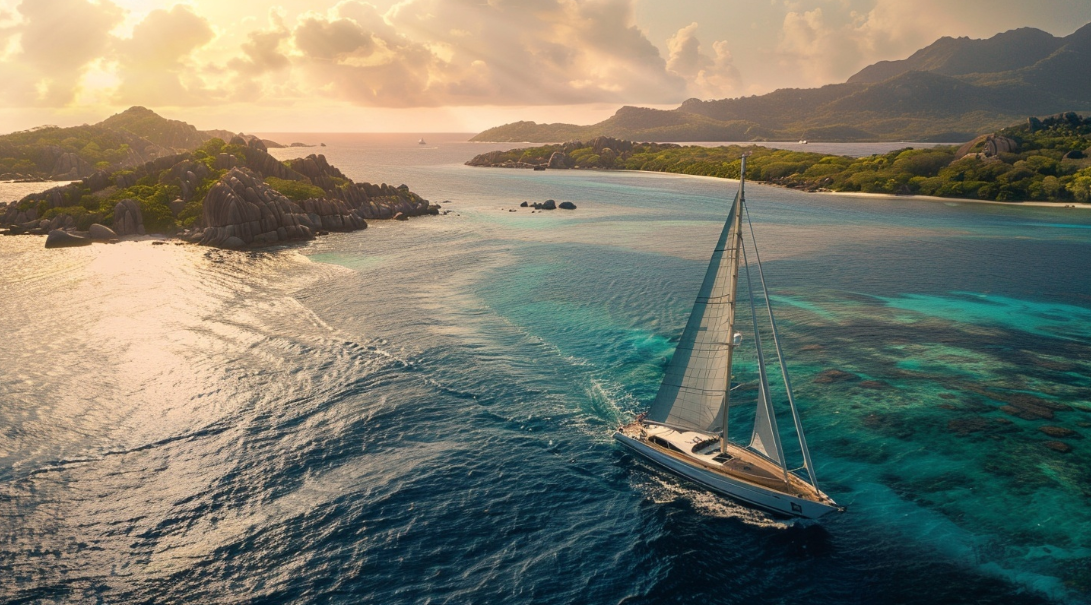
Sailing in Seychelles works because the distances are short and the water between the islands stays protected. Mahé to Praslin is 30 nautical miles, Praslin to La Digue another four. A yacht covers the main archipelago in a week without a single overnight passage, and every anchorage sits within sight of granite headlands. At CharterClick we build routes around that geography, using the gaps between islands as part of the trip rather than transit to be endured.
Is Seychelles Good for Sailing?
Yes, and the reasons are specific. The archipelago sits outside the tropical cyclone belt, so there is no closed season the way Caribbean or Pacific charter grounds shut down for hurricanes. Inner-island passages run 4 to 30 nautical miles, keeping most legs to three or four hours. Trade winds blow steadily at 10 to 20 knots from May to September and drop to 5 to 15 knots during the northwest monsoon, which gives both active sailors and beginners a window that suits them. Water stays between 26°C and 29°C year round.
The limits are worth knowing too. Anchorages in the inner islands are shallow, and anything drawing more than 2 metres loses access to roughly half of them. Outer-island passages to Frégate or Bird Island run 35 to 60 miles with no shelter en route, which puts them outside the range of a relaxed week. For a full month-by-month breakdown of conditions, see our year-round climate guide.
Ready-Made Sailing Itineraries
Three routes cover most of what guests ask for. Each assumes departure from Eden Island Marina on Mahé and returns there, with daily distances kept under four hours of sailing.
5-Day Inner Islands Route
The shortest route that still reaches Praslin and La Digue. It suits couples and first-time charterers who want the highlights without long days at the helm.
|
Day |
Route |
Distance |
Night at anchor |
|
1 |
Eden Island → Sainte Anne Marine Park → Beau Vallon |
12 nm |
Beau Vallon Bay |
|
2 |
Beau Vallon → Praslin |
28 nm |
Anse Lazio |
|
3 |
Praslin → Curieuse → La Digue |
10 nm |
La Digue |
|
4 |
La Digue → Coco Island → Baie Sainte Anne |
9 nm |
Baie Sainte Anne |
|
5 |
Praslin → Mahé |
30 nm |
Eden Island Marina |
Day two is the longest leg at roughly four hours under sail. Coco Island on day four is barely two boulders and a stand of palms, with snorkelling that regularly outranks anything else on the route.
7-Day Classic Seychelles Sailing Itinerary
The most requested route. Seven days add Cousin, Aride and Félicité to the classic triangle, with a spare afternoon for weather.
|
Day |
Route |
Distance |
Night at anchor |
|
1 |
Eden Island → Sainte Anne Marine Park |
6 nm |
Cerf Island |
|
2 |
Cerf → Praslin |
26 nm |
Baie Sainte Anne |
|
3 |
Praslin → Curieuse → Anse Lazio |
8 nm |
Anse Lazio |
|
4 |
Praslin → Aride → Cousin |
14 nm |
Cousin anchorage |
|
5 |
Cousin → Félicité → La Digue |
16 nm |
La Digue |
|
6 |
La Digue → Coco Island → Praslin |
11 nm |
Baie Sainte Anne |
|
7 |
Praslin → Mahé |
30 nm |
Eden Island Marina |
Aride and Cousin are managed nature reserves with landing by guided tour only, arranged in advance. Day four often becomes the highlight of the week for anyone who cares about seabirds, since Aride holds one of the densest colonies in the Indian Ocean.
10-Day Extended Route
Ten days open the eastern islands and allow a slower pace through the inner group. This route needs a settled forecast for the Frégate leg.
|
Days |
Route |
Focus |
|
1–2 |
Mahé → Sainte Anne → Beau Vallon |
Provisioning, marine park snorkelling |
|
3–4 |
Mahé → Frégate (35 nm) |
Open-water passage, private island anchorage |
|
5–6 |
Frégate → La Digue → Félicité |
Anse Source d'Argent, reef-sheltered nights |
|
7–8 |
Praslin, Curieuse, Aride, Cousin |
Vallée de Mai, tortoises, bird reserves |
|
9–10 |
Praslin → Coco Island → Mahé |
Final snorkelling, return leg |
Frégate is a private island, and shore access depends on the resort's availability on your dates. The team confirms this before the route is fixed.
Sailing Conditions by Season
Wind and sea state shift with the two monsoons, and the difference decides which route makes sense for a given crew.
|
Season |
Wind |
Sea state |
Best suited to |
|
Southeast monsoon, May–September |
15–25 knots SE |
Slight to moderate |
Active sailing, clear visibility, experienced crew |
|
Northwest monsoon, November–March |
5–15 knots NW |
Calm to slight |
Families, beginners, swimming and snorkelling |
|
Transitions, April and October |
5–10 knots variable |
Very calm |
Photography, first-time charterers, flat anchorages |
April and October deliver the flattest water of the year. June through September brings the strongest and most reliable breeze, which is when the archipelago sails properly rather than motors. Rain during the northwest monsoon arrives as short afternoon downpours instead of full wet days.
Charter Formats for a Sailing Trip
The same route runs very differently depending on who handles the boat. Three formats cover the range.
Bareboat
You skipper the yacht yourself. A recognised licence is required, RYA Day Skipper, ICC or equivalent, along with verifiable recent experience, both checked before the boat is released. The inner islands are forgiving ground for a competent skipper, with short legs, charted anchorages and mobile coverage across most of the route. Details on requirements and available vessels are on our bareboat charter page.
Skippered
A professional captain runs the boat while you set the direction. This is the most common choice for guests without a licence, and local knowledge shows up in small decisions, reading coral heads by colour or picking the bay that stays calm when the southeast wind builds. You keep the freedom of a private yacht without the paperwork.
Fully Crewed
A captain plus a hostess or chef handles navigation, meals and the running of the boat. It suits longer routes, larger groups and anyone who wants the ten-day itinerary without planning a single leg of it.
Choosing the Right Yacht for the Route
Draft and hull type change which anchorages open up, and that shapes the itinerary more than most people expect.
Catamarans
Catamarans dominate Seychelles charters. Shallow draft reaches reef-fringed bays a monohull cannot enter, wide flat decks suit families, and two hulls cut the rolling at anchor. For the inner-island routes above, a catamaran opens roughly twice as many overnight spots.
Monohulls
A well-rigged sailing yacht performs better upwind during the southeast monsoon, when passages to windward can be lively. Deeper keels come at a cost, since anything drawing more than 2 metres stays within marked channels and loses access to the shallower anchorages.
Motor Yachts
Speed matters on the outer-island legs, where a 35 or 60 mile passage takes a full day under sail. Motor yachts also handle tight schedules better and hold air conditioning through the humid northwest months. Compare specifications and capacity across the current fleet in our boat catalog.
Daily Rhythm on a Sailing Itinerary
Days develop their own tempo once the route settles. Mornings carry the energy, afternoons slow into heat and shade, evenings bring cooler air and whatever the day produced.
Morning Departures
Hauling anchor by seven or eight beats the afternoon chop, and the early light turns the granite headlands pink before the sun gets high. Most legs on the inner-island routes finish before lunch.
Midday Stops
By late morning the goal is clear water over sand. Drop the hook, swim, eat in the cockpit. Some of the better midday spots never appear on charts, just a dip in the reef where the water turns turquoise. The inner islands hold some of the most accessible snorkelling in Seychelles, with shallow reefs around Sainte Anne, Curieuse and Cousin.
Afternoon Anchoring
Afternoons are about positioning for the night. Two bays that look identical on the plotter can behave completely differently once the wind fills in, which is where a skipper who knows the water earns their keep.
Evenings
Some evenings call for a dinghy ride to a beach restaurant at La Passe or Baie Sainte Anne. Others for cooking aboard while the sun drops behind Silhouette. The boat swings gently, the water goes flat, and nothing dictates when dinner starts.
Shore Stops Along the Route
What happens off the boat shapes the trip as much as the sailing does.
Beaches and Short Walks
Every island on these routes has at least one beach where a dinghy lands without trouble. Granite trails on Praslin, the Anse Marron scramble on La Digue, flat paths through the mangroves on Curieuse, all within minutes of the anchorage. A route built entirely around Praslin and its neighbours is covered on our Praslin charter page.
Wildlife
Giant tortoises on Curieuse, hawksbill turtles nesting on empty beaches, whale sharks passing through during the transition months. Aride and Cousin hold seabird colonies among the densest in the tropics, with landing by guided tour only.
Villages and Harbours
La Passe on La Digue, Baie Sainte Anne on Praslin. Small, walkable, unhurried. A Creole lunch, a cold SeyBrew, a conversation with someone mending nets, none of which a coach tour can schedule.
Frequently Asked Questions
How many days do you need to sail the Seychelles?
Five days reach Praslin and La Digue with the highlights intact. Seven add the nature reserves at Aride and Cousin plus a spare afternoon for weather. Ten or more open the eastern islands and allow a genuinely slow pace. Anything under four days limits you to Mahé and the Sainte Anne Marine Park.
Do I need a sailing licence to charter in Seychelles?
Only for bareboat, where you run the yacht yourself. That requires an RYA Day Skipper, ICC or equivalent along with recent verifiable experience, checked before departure. Skippered and crewed charters need no qualification from you at all.
What is the best time of year for sailing in Seychelles?
June to September for active sailing, with steady southeast trades at 15 to 25 knots and the clearest underwater visibility of the year. April and October for the flattest water and easiest conditions. November to March for warm calm seas, with short afternoon showers and the busiest booking period over the holidays.
Is Seychelles suitable for first-time sailors?
The inner islands are among the more forgiving charter grounds available. Legs stay under 30 nautical miles, anchorages are charted and visible, and the archipelago sits outside the cyclone belt. First-timers who want to sail rather than be sailed usually take a skipper for the first few days and take over once the routine is clear.
Catamaran or monohull for a Seychelles sailing trip?
Catamaran for families, groups and anyone prioritising anchorage choice, since the shallow draft opens roughly twice as many overnight spots and the deck stays level. Monohull for sailors who want performance upwind during the southeast monsoon and do not mind the deeper keel limiting where the boat can sit overnight.
Can I sail to the outer islands?
Frégate at 35 nautical miles and Bird Island at roughly 60 are reachable, but each crossing takes a full day with no shelter en route. Ten days minimum, a settled forecast and a vessel with the range for it. Shore access to private islands depends on the resort and is confirmed before the route is fixed.
Send your dates and the number of days you have, and the team will match a route and a yacht to them. Every charter is private, with the whole boat reserved for your group. Start with the yacht charter options in Seychelles or send a request through the form, WhatsApp or Telegram.