Bird Island Seychelles — Travel Guide
Jul 23, 2026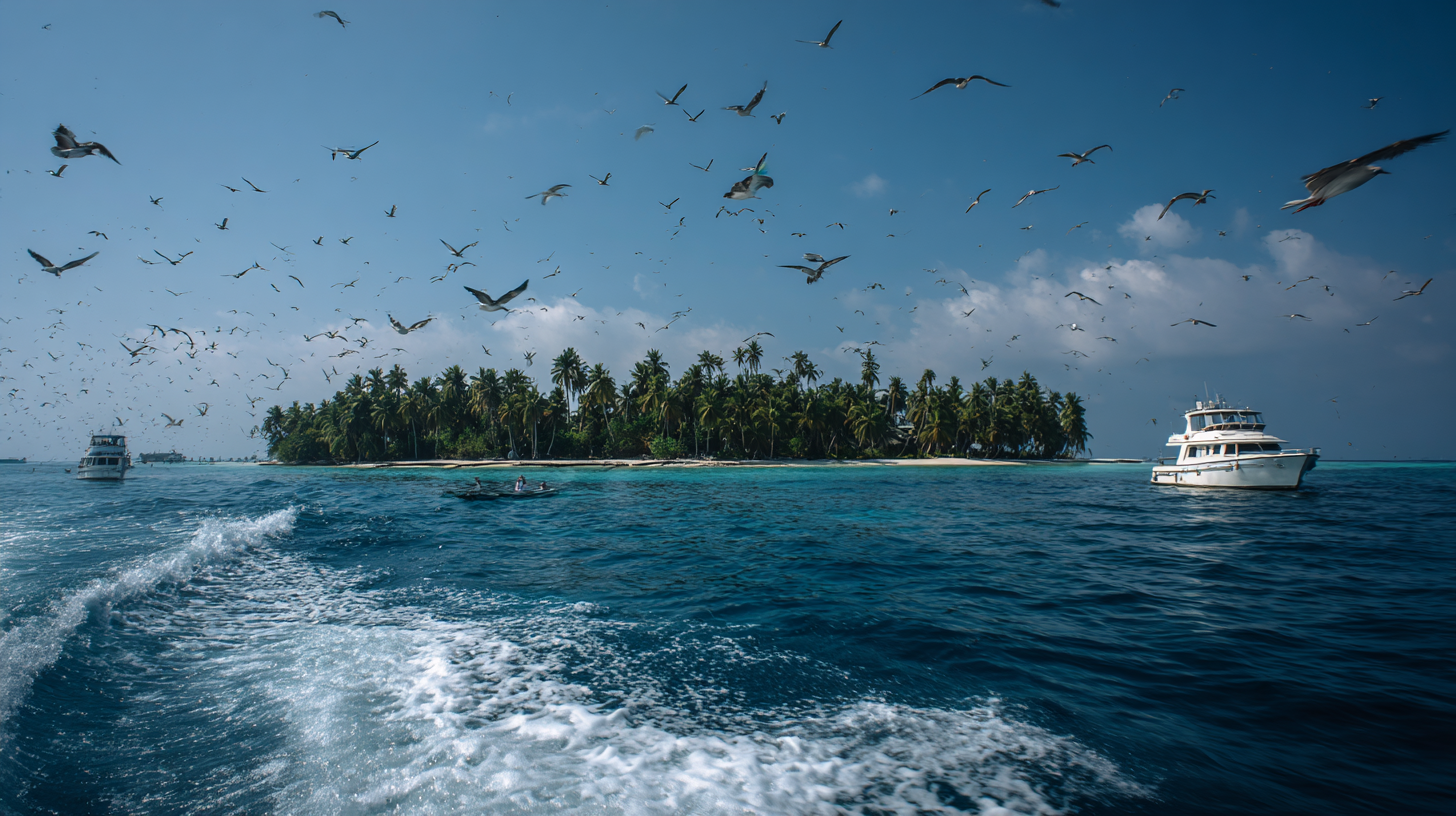
Bird Island is a private coral island of roughly 1.5 square kilometers located about 100 kilometers north of Mahé, marking the northernmost point of the Seychelles archipelago. It is known for a breeding colony of sooty terns exceeding one million birds and for its status as one of the earliest eco-tourism projects in the Seychelles. Two routes reach the island: a 30-minute domestic flight from Mahé and a sea passage by charter yacht arranged in advance with the island's management.
What Is Bird Island
Bird Island is a privately owned coral cay and nature sanctuary that has belonged to a single family since 1967. The island has no permanent population beyond staff and resident researchers, which keeps its habitat largely undisturbed.
The island lies approximately 100 kilometers north of Mahé and covers close to 1.5 square kilometers. Unlike the granite inner islands of the Seychelles, Bird Island is a flat coral cay resting on a reef, ringed by white sand and covered with tropical vegetation.
The defining feature of Bird Island is its sooty tern colony, which numbers well over one million birds during the nesting season. This concentration ranks among the largest seabird gatherings in the world and gives the island both its name and its primary draw.
Captain James Cook of the British Royal Navy recorded the first mention of the island and named it for the abundance of birds. The land later served as a coconut plantation, and traces of that period remain in the casuarina and mapou trees growing across the former plantation grounds.
Wildlife of Bird Island
Bird Island supports more than 20 species of resident birds alongside a seasonal migratory colony of sooty terns exceeding one million individuals. The island sits within the East African and Indian Ocean migratory flyways, which bring additional species through in predictable seasonal cycles.
The Sooty Tern Colony
Sooty terns nest on Bird Island between April and October, occupying open sandy ground and coconut groves in dense numbers. The swirl of the colony above the white sand is the island's signature natural event and the reason most birders schedule visits inside this window.
The colony has grown from around 15,000 pairs to well over 700,000 pairs since conservation work began in the late 1960s. That growth followed directly from habitat management: owners and scientists expanded the nesting ground available to the terns, and the colony enlarged in response.
Resident and Migratory Birds
Resident species include fairy terns, brown and lesser noddies, frigatebirds, white-tailed tropicbirds, and barred ground doves. Fairy terns lay a single egg on a bare branch without building a nest, which makes them among the more distinctive residents to observe.
Migratory waders arrive during the northern winter between October and March, having traveled thousands of kilometers from the Arctic tundra. Regular migrants include Pacific golden plovers, ruddy turnstones, and whimbrels, and the migration peak falls between October and December, when rare vagrants may also appear.
Giant Tortoises and Sea Turtles
Bird Island is home to a population of giant land tortoises, the best-known of which is Esmeralda, among the heaviest free-roaming tortoises ever recorded. The tortoises move across the island without enclosures and are a fixture of any visit.
Green turtles and hawksbill turtles nest on the island's beaches, adding a marine dimension to its wildlife. Nesting brings turtles ashore onto the sand, while the surrounding reef holds turtles in the water throughout the year.
Best Time to Visit Bird Island
The best month to visit Bird Island depends on the purpose of the trip: the sooty tern colony is present in full from April to October, wader migration peaks from October to December, and the driest, coolest conditions fall between May and September.
The table below maps natural events against weather conditions across the year.
|
Period |
Natural events |
Weather conditions |
|
April–July |
Sooty tern courtship and egg-laying |
Transition into the drier southeast monsoon |
|
May–September |
Full sooty tern colony; chick crèches form from July |
Southeast monsoon — breezier, cooler, drier, less humid |
|
September |
Peak window for whale shark sightings offshore |
Dry, settled sea conditions |
|
October–December |
Wader migration peaks; Pacific golden plovers in breeding plumage |
Onset of the wetter northwest monsoon |
|
November–March |
Migratory shorebirds present |
Northwest monsoon — warmer, more humid, wetter |
Sea conditions shift with the monsoon, shaping the yacht's passage to the island. April and the October–November transition bring calmer water and the clearest visibility, which makes those windows the most comfortable for the open-water crossing from Mahé.
Travelers can align timing with their main interest. Birders tracking the tern colony should target April through October; visitors seeking calm swimming and turtle activity benefit from the drier southeast monsoon; and yacht travelers gain the smoothest crossings in April and across the late-year transition.
How to Get to Bird Island
Bird Island is reached by two methods: a 30-minute domestic flight from Mahé that lands on the island's grass airstrip, and a sea passage by charter yacht arranged in advance with the island's management. No scheduled ferry serves the island.
|
Criterion |
Flight from Mahé |
Charter yacht |
|
Travel time |
About 30 minutes |
A full day's sailing from Victoria |
|
Departure point |
Seychelles International Airport, Mahé |
Victoria Harbor or Eden Island Marina, Mahé |
|
Flexibility |
Fixed schedule, strict luggage limits |
Flexible route, stops, and timing; liveaboard format |
|
Access format |
Lands on the island airstrip |
Anchors offshore; landing coordinated in advance |
|
Journey value |
Transfer only |
The passage itself forms part of the trip |
Flights from Mahé
Chartered flights connect Mahé to Bird Island in roughly 30 minutes and land on a grass airstrip. This is the fastest route and the standard option for travelers who intend to sleep on the island.
Reaching Bird Island by Sea
Bird Island lies about 100 kilometers north of Victoria, the capital of Mahé, which places it at the outer edge of the northern islands. A yacht covers that distance directly across open water, turning the crossing into a day of sailing rather than a short hop.
Landing on the island requires prior arrangement with the island's management, as mooring is restricted to protect the sanctuary. Yachts anchor offshore, and the shore visit is agreed before departure rather than decided on arrival.
CharterClick operates yacht charters departing from Eden Island Marina and Victoria Harbor on Mahé, the two starting points for a northern crossing toward Bird Island. Both marinas sit on the route north, putting the island within a single day's passage.
Visiting Bird Island by Charter Yacht
A charter yacht reaches Bird Island as the far point of a multi-day northern route through the outer islands, with the crossing from Victoria occupying a full day of sailing. The trip runs as a liveaboard: the yacht carries the group, houses it overnight, and sets the itinerary's pace.
A typical northern itinerary runs from Mahé to Bird Island, continues to nearby Denis Island, and returns toward Mahé. That sequence links the two northernmost coral islands of the Seychelles in one voyage and splits the sailing into manageable daily legs.
The passage opens forms of leisure that a fixed island stay does not include. Snorkeling and diving over reefs along the route, deep-sea fishing during the crossing, swimming from the deck, and marine wildlife watching all fall inside the voyage, and the whale shark season around September adds a further reason to be on the water.
Anchoring points remain flexible across the route. A yacht can hold position off a quiet reef, extend time at a stop that proves rewarding, or shift the day's plan according to sea conditions, which is not possible on a fixed flight schedule.
Crossings of this distance call for vessels built for open water. CharterClick charters motor yachts and catamarans that carry the range and stability required for the northern route, with departures from Eden Island Marina and Victoria Harbour.
CharterClick coordinates the operational side of the voyage. Shore access on Bird Island is arranged in line with the island's visit rules, additional services such as catering and water activities are organized through partners, and charters are booked in EUR, USD, or AED.
Staying Overnight Around Bird Island
Overnight stays connected to Bird Island take two forms: sleeping on the island itself, or sleeping aboard a yacht anchored offshore during a coordinated visit. The choice determines both the shape of the trip and how long a traveler remains within reach of the island.
Accommodation on the island is limited to a single property, and the number of rooms is small by design. The island runs on an eco-concept with minimal built infrastructure, which keeps visitor numbers low and the habitat undisturbed.
Staying aboard a chartered yacht removes the dependency on that limited capacity. The vessel provides cabins, deck space, and shade for the full duration of the northern route, and the group remains together on the water between the island stops.
A liveaboard also extends the itinerary beyond a single destination. Nights spent aboard allow the route to take in Denis Island and open-water sailing legs rather than tying the trip to one island and one return flight.
Beaches, Snorkeling, and Water Activities
Bird Island is encircled by roughly five kilometers of white coral sand, and the leisure around it centers on swimming, snorkeling, diving, kayaking, fishing, and turtle watching. The flat coral setting and the reef around it keep the shoreline accessible along most of the island's edge.
The island's named beaches divide the coastline into distinct stretches. North Point, Hirondelle Bay, Passe Coco, and the West Coast each front a different section of shore, producing different conditions for swimming and for time on the sand.
Snorkeling and diving center on the reef that surrounds the coral cay, where clear water and shallow coral shelves hold reef fish, rays, and turtles. Reef life is visible close to shore, and the surrounding water stays warm across the year.
Fishing works both from the island's waters and along the yacht passage. On a charter route the sailing legs between islands pass through open water where deep-sea fishing fills the time between anchorages.
Seasonal marine sightings shape the water activities across the year. Whale sharks appear offshore most reliably around September, and nesting green and hawksbill turtles bring marine reptiles onto nearby beaches and into the water.
Frequently Asked Questions About Bird Island
Where is Bird Island located?
Bird Island is located about 100 kilometers north of Mahé, at the northernmost point of the Seychelles archipelago. It is a flat coral cay of roughly 1.5 square kilometers, distinct from the granite inner islands of the Seychelles.
How many birds nest on Bird Island?
Bird Island hosts a breeding colony of sooty terns that exceeds 1 million birds during the nesting season, alongside more than 20 resident bird species. The colony has grown from around 15,000 pairs to over 700,000 pairs since conservation work began in the late 1960s.
How do you get to Bird Island?
Bird Island is reached by a 30-minute domestic flight from Mahé that lands on a grass airstrip, or by a charter yacht passage of about 100 kilometers from Victoria. No scheduled ferry serves the island, and sea access requires prior arrangement with the island's management.
Can you visit Bird Island by yacht?
Bird Island can be visited by yacht, though landing must be coordinated in advance with the island's management, since mooring is restricted to protect the sanctuary. Yachts anchor offshore, and CharterClick runs charters toward the island from Eden Island Marina and Victoria Harbor on Mahé.
When is the best time to see the sooty tern colony?
The best time to see the sooty tern colony is between April and October, when more than a million birds nest on the island. Courtship and egg-laying run from April to July, and chick crèches form from July through September.
Is Bird Island worth visiting?
Bird Island rewards travelers focused on wildlife, seabird colonies, and undeveloped coral-island scenery. It suits birders, families seeking quiet beaches, and yacht travelers extending a northern Seychelles route, though its minimal infrastructure favors nature over resort amenities.