Moyenne Island - All You Need to Know About It, and How to Visit It
Sep 28, 2026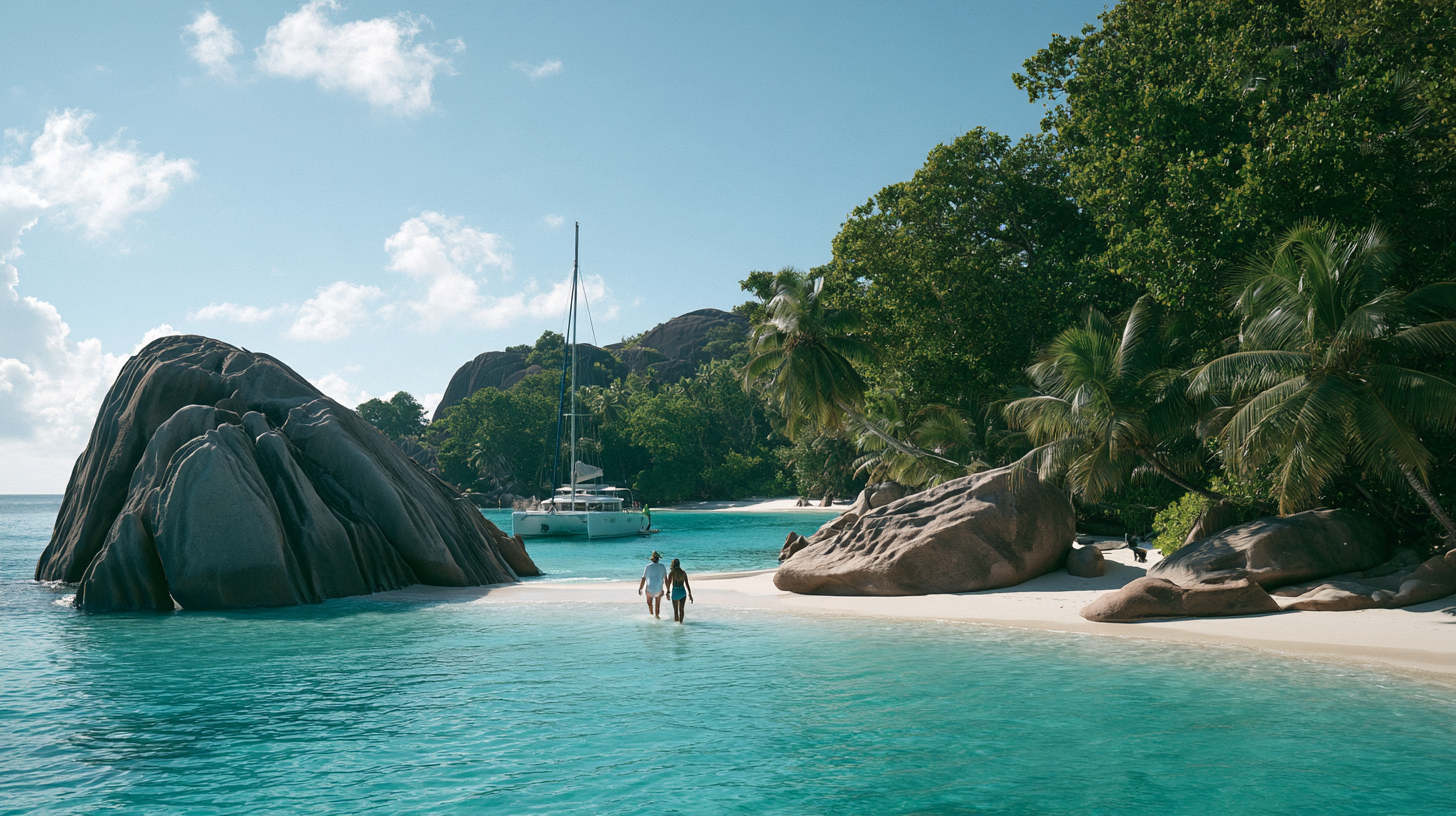
Moyenne Island covers 9.9 hectares inside Sainte Anne Marine National Park, about 6 kilometers east of Victoria on Mahé. Travel writers often describe it as the smallest national park in the world, and its forest, trails, and giant tortoises draw day visitors from the main island.
The island owes its present condition to Brendon Grimshaw, an English newspaper editor who purchased Moyenne in 1962. He spent the rest of his life restoring it with his Seychellois companion, René Antoine Lafortune. This guide covers the island's key facts, history, wildlife, and main sights, along with practical details for getting there.
Moyenne Island at a Glance
Moyenne sits among the small granite islands off Mahé's northeast coast, between Sainte Anne Island and Round Island. Its name comes from the French word for "middle." The whole island forms Moyenne Island National Park, a protected area run separately from the marine park around it.
| Fact | Detail |
|---|---|
| Location | Sainte Anne Marine National Park, off the northeast coast of Mahé |
| Distance from Victoria | About 6 kilometers east by sea |
| Area | 9.9 hectares |
| Length and width | About 400 meters by 300 meters |
| Coastline | About 1.7 kilometers |
| Highest point | Mont Moyenne, 61 meters |
| Status | Moyenne Island National Park since 2009 |
| Management | Moyenne Island Foundation |
| Access | By boat only, with landing on the beach |
| Main attractions | Giant tortoises, nature trails, endemic palms, historic graves |
The title of the world's smallest national park reflects the island's small size and its park status. No international body ranks national parks by area, so the phrase serves as a widely repeated description.
Every visit begins from the water. No bridge or scheduled ferry connects Moyenne to Mahé, and most visitors arrive on excursions that combine the island with snorkeling in the marine park.
How Brendon Grimshaw Restored Moyenne Island
Moyenne changed from an overgrown, rat-infested island into a protected forest through roughly four decades of manual labor by two men. The sections below follow that transformation, and a timeline summarizes the key dates.
An Abandoned Island Before 1962
Local stories connect Moyenne with pirates of the 18th and 19th centuries, and two old graves on the island are labeled as pirate graves. No historical record confirms the identity of the people buried there.
Most accounts state that no one lived on Moyenne permanently after 1915. The island's information board adds that Philippe Georges owned it from 1946 and initially spent time there with his wife Vera. The couple later moved to Mahé. By the early 1960s, weeds smothered the ground, rats multiplied in the undergrowth, and birds had almost disappeared. The vegetation grew so dense that falling coconuts reportedly never reached the soil.
Grimshaw and René Lafortune
Brendon Grimshaw, born in Dewsbury, Yorkshire, in 1925, had worked as a newspaper editor in Kenya and Tanzania. He first visited Seychelles in 1962, as political change swept across East Africa, and found Moyenne almost by chance. That same year he purchased the island from Philippe Georges for £8,000.
Grimshaw settled on Moyenne permanently in 1972 and installed a water supply, electricity, and a telephone line.
His partner was René Antoine Lafortune, the 19-year-old son of a local fisherman who had looked after the island for its previous owner. Together, they cleared the scrub by hand, planted about 16,000 trees, including roughly 700 mahogany trees, and built about 4.8 kilometers of nature paths. They also introduced Aldabra giant tortoises and bred them on the island.
Grimshaw's father joined him after his mother's death and spent his final years on Moyenne. The two men grew close during that period, and the father's grave remains on the island today.
The pair opened Moyenne to day visitors, who waded ashore because the island had no jetty. Grimshaw documented the project in his 1996 book A Grain of Sand, and a documentary with the same title appeared in 2009.
From Private Island to National Park
Grimshaw repeatedly rejected offers to sell the island for development, reportedly including a proposal worth 50 million US dollars to build a hotel. He intended Moyenne to remain a natural space accessible to everyone.
After Lafortune died in 2007, Grimshaw established a perpetual trust and signed an agreement with the Seychelles government. Moyenne was declared a national park in July 2009, although some sources give 2008. Grimshaw died in July 2012 and lies buried on the island beside his father. The Moyenne Island Foundation, led by his friend Suketu Patel, now manages the park.
| Year | Event |
|---|---|
| 1700s and 1800s | Island linked to pirates in local legend |
| 1915 | Last permanent residents leave, according to most accounts |
| 1946 | Philippe Georges acquires the island |
| 1962 | Brendon Grimshaw buys Moyenne for £8,000 |
| 1972 | Grimshaw settles on the island permanently |
| 1996 | Grimshaw publishes A Grain of Sand |
| 2007 | René Antoine Lafortune dies |
| 2009 | Moyenne declared a national park |
| 2012 | Grimshaw dies and is buried on the island |
Giant Tortoises, Plants, and Birds on Moyenne Island
Nearly all the wildlife visitors encounter on Moyenne today returned or arrived because of the restoration work. The forest, the tortoises, and the birds form one connected system that Grimshaw and Lafortune assembled tree by tree.
Aldabra Giant Tortoises
Aldabra giant tortoises roam freely across Moyenne, while small pens near the paths shelter young animals. Grimshaw introduced the species and established a breeding population, and in 2012 he cared for about 120 tortoises. A 2022 BBC report estimated nearly 50, so counts have varied considerably over time.
The oldest tortoise in 2012, named Desmond after Grimshaw's godson, was 76 years old. The species originates from Aldabra Atoll in the outer islands, where roughly 100,000 individuals live. Adults can live over 100 years and weigh up to 250 kilograms.
Signs along the trail ask visitors to behave respectfully around the tortoises, and island staff decide whether guests may touch or feed them.
Endemic Plants and Palms
Moyenne supports some 40 plant species found only in Seychelles, more than half of them unique to the granitic islands. It is also the only location, besides the Vallée de Mai on Praslin, where all six palms endemic to Seychelles grow together, including the coco de mer.
The mahogany trees planted in the early decades now reach 18 to 21 meters. Mango trees, coconut palms, and native hardwoods complete the canopy, and identification signs along the trail name the principal species.
Birds
Birds had almost vanished from Moyenne when Grimshaw arrived. He transported birds from a neighboring island, fed the first arrivals, and relied on fruit from the maturing trees to attract others. Reports from 2012 estimated the island's bird population at about 2,000.
What to See on Moyenne Island
A walk around Moyenne takes about two hours at a relaxed pace, including stops at the graves, the museum, and the viewpoint. The paths form a loop through the forest and return to the beach where visitors land.
| Sight | What visitors find |
|---|---|
| Nature trail | About 4.8 kilometers of paths with signs naming trees and plants |
| Mont Moyenne | The highest point at 61 meters, with views toward Mahé and the marine park islands |
| Pirate graves | Two old graves linked by legend to pirates, with no confirmed identity |
| Grimshaw graves | The graves of Brendon Grimshaw and his father |
| Chapel | A small thatched chapel in the forest |
| Museum | Displays on Grimshaw and the history of the island |
| Settler ruins | Remains of houses from earlier residents |
| Beaches and coves | White sand and granite boulders with calm water for swimming |
The pirate legend adds a treasure-hunting dimension to the visit. Grimshaw conducted two major excavations in search of buried treasure and discovered evidence of man-made hiding places, although no gold or other valuables ever emerged.
A viewpoint and a beach on the island commemorate Vera Georges, who spent her days on Moyenne while her husband worked on Mahé. A small restaurant near the landing beach serves Creole dishes, and the warden's residence stands behind it.
The water around Moyenne belongs to Sainte Anne Marine National Park. The channel between Moyenne and Sainte Anne Island ranks among the park's best snorkeling areas, with more than 150 species of marine life recorded there.
How to Get to Moyenne Island
Moyenne is only reachable by boat, and most visitors arrive on a day trip to Sainte Anne Marine National Park from Mahé. The crossing takes relatively little time, since the island lies just a few kilometers off the capital.
Location in Sainte Anne Marine National Park
Sainte Anne Marine National Park, established in 1973 as the first marine park in the Indian Ocean, protects a cluster of small islands off Victoria. Moyenne lies near its center, surrounded by Sainte Anne Island, Cerf Island, Round Island, and Long Island. Departures operate from Victoria and the marinas along Mahé's east coast.
The park contains one of the largest seagrass meadows in the granitic islands, where green turtles feed regularly, and hawksbill turtles forage over its reefs. Fishing is prohibited throughout the park, which keeps fish populations dense around Moyenne.
Day Tours From Mahé
Group day tours typically combine a guided walk on Moyenne lasting about two hours with snorkeling in the marine park and a lunch stop on a neighboring island. Glass-bottom boats and catamarans operate these excursions from Victoria, and the Moyenne entrance fee is frequently included in the tour.
Landing and Entry
Moyenne has no jetty, so boats anchor or drift in the shallows and visitors wade ashore or transfer by tender. Water shoes and a dry bag for phones and cameras make the landing easier.
Every visitor pays an entrance fee that supports the Moyenne Island Foundation. The island limits the number of people ashore to about 50 at any one time, which keeps the trails quiet even on busy days.
Visiting Moyenne Island by Yacht
A private yacht converts a visit to Moyenne into a flexible day in the marine park. Guests determine the arrival time, the length of the walk, and the stops that follow, instead of adapting to a group schedule.
Moyenne ranks among the closest destinations to Eden Island Marina, where CharterClick bases its yachts, so the crossing requires minimal time. A half-day charter accommodates the island walk and a snorkeling stop in the channel off Sainte Anne Island. A full day leaves room for lunch at anchor and exploration of another stretch of coastline on Mahé.
Timing also affects the experience ashore. Because the island admits about 50 people at once, a landing outside the busiest tour hours usually brings quieter paths and more time with the tortoises.
After the walk, the snorkeling sites of the marine park lie within minutes. The seagrass meadows off Sainte Anne Island attract feeding green turtles, and the reefs in the channel hold dense schools of reef fish. A single morning can therefore combine tortoises on land with turtles in the water.
Marine park rules apply to every vessel. Crews use mooring buoys where the park provides them, keep anchors off coral and seagrass, and never fish inside the park. Guests still disembark by tender or wade through the shallows, since the island lacks a jetty.
Catamarans draw little water, so they can wait closer to the landing beach and provide a stable platform for swimming afterward. Motor yachts reach the island faster, and suit groups who want to add further stops along the coast of Mahé.
CharterClick operates crewed motor yachts and catamarans for half-day, full-day, and longer charters. You pay the entrance fee for Moyenne separately on the island, and you arrange any guiding or catering outside the charter.
Moyenne Island FAQ
The answers below cover the questions travelers ask most often about Moyenne Island.
Why is Moyenne Island famous?
Moyenne Island is widely known as the world's smallest national park. The Englishman Brendon Grimshaw purchased it in 1962 and, with René Lafortune, restored it over four decades, planting about 16,000 trees and introducing Aldabra giant tortoises.
Who owns Moyenne Island?
Moyenne Island has operated as a national park since 2009 under a perpetual trust that Grimshaw established with the Seychelles government. The Moyenne Island Foundation now manages the island.
How big is Moyenne Island?
Moyenne Island covers 9.9 hectares and measures about 400 meters long and 300 meters wide. Its highest point, Mont Moyenne, rises to 61 meters.
How do you get to Moyenne Island?
You can reach Moyenne Island only by boat from Mahé, either on a group day tour of Sainte Anne Marine National Park or on a private charter. The island lies about 6 kilometers east of Victoria, and visitors wade ashore or land by tender.
How long should you spend on Moyenne Island?
About two hours covers the trail, the graves, the museum, and time with the tortoises. A half-day excursion also allows a snorkeling stop in the surrounding marine park.
Can you stay overnight on Moyenne Island?
Moyenne Island offers no visitor accommodation, so every trip operates as a day visit. Overnight options are available on Mahé and several other islands in the marine park.
Practical Tips for Visiting Moyenne Island
A visit to Moyenne lasts only a few hours, and a little preparation makes the landing, the walk, and the time with the tortoises easier.
- Bring drinking water, reef-safe sunscreen, and insect repellent for the forest paths
- Wear water shoes or sandals that can get wet during the landing
- Pack phones and cameras in a dry bag for the wade ashore
- Plan about two hours on the island and half a day with snorkeling
Sea conditions matter for the crossing and the landing. The calmest water around the inner islands usually comes in April, October, and November, between the two trade wind seasons.
The tortoises move freely along the paths and around the landing beach. Keep hands away from their mouths, never sit on a shell, and follow staff instructions on touching or feeding.
Marine park rules also cover the beaches and water. Fishing, collecting shells, and taking coral are prohibited, and the graves and the chapel deserve the same quiet respect as any historic site.