Seychelles Tortoise — Giant Tortoises, Remote Islands & Yacht Access
Feb 19, 2026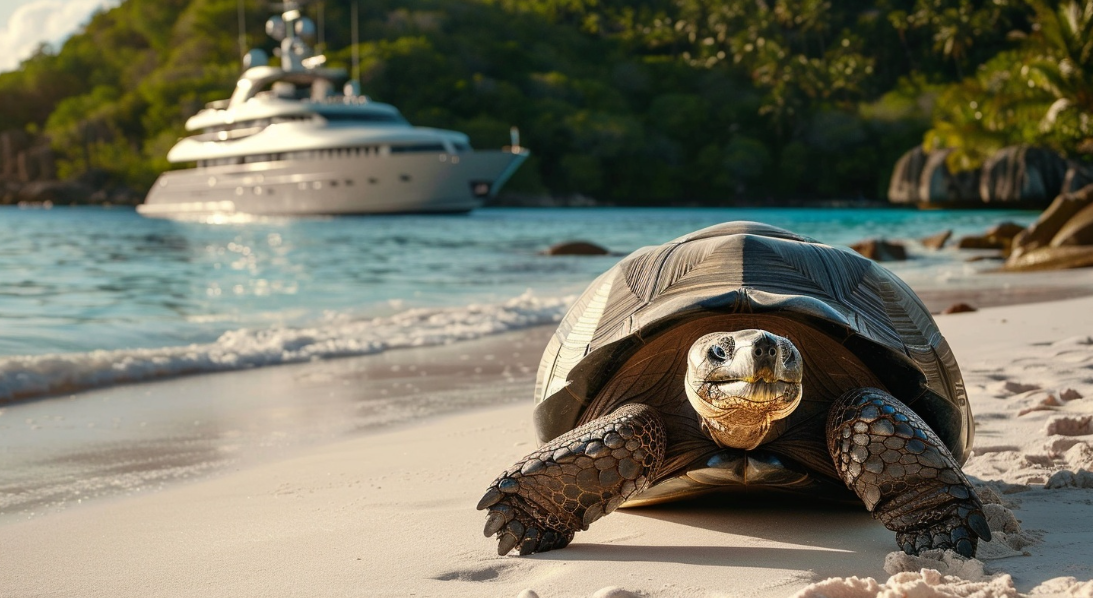
Few places on Earth let you stand face-to-face with a creature that was alive before your grandparents were born. The Seychelles tortoise population — scattered across granite and coral islands in the Indian Ocean — offers exactly that. These animals, some weighing over 250 kilograms, have roamed the same sand and scrub for centuries. Reaching them is half the story.
Why Seychelles Is Famous for Giant Tortoises
The relationship between Seychelles and its tortoises runs deeper than tourism brochures suggest. It's geological, ecological, and cultural. These islands separated from the African mainland millions of years ago, and the species that survived here did so in near-total isolation.
A Species That Shaped Island Identity
When early sailors reached the archipelago, they found giant land tortoises moving through coastal forests in staggering numbers. Sailors hunted them for meat — the animals survived months aboard ships without food or water. That exploitation nearly wiped them out. A cultural shift during the twentieth century turned tortoises from a food source into a national symbol. Today, the giant tortoise in Seychelles appears on currency, stamps, and official seals.
Longevity, Size, and Slow Island Rhythm
Aldabra giant tortoises regularly live past 100 years. Some individuals have crossed 190. They grow slowly, breed at a measured pace, and move in a way that makes you reconsider your own schedule. Males reach 120 centimetres in shell length. Their metabolism adapts to scarce food and intense heat, a survival trick shaped by thousands of years on remote island habitats.
Why These Animals Became a Symbol of Seychelles
The giant tortoise Seychelles populations represent recovery after near-extinction. Conservation programmes brought them back from a few hundred to over 100,000 on Aldabra Atoll alone. That rebound became a point of pride — proof that island ecosystems can heal when managed carefully.
Where to See Giant Tortoises in Seychelles
Not every island in the archipelago hosts tortoises. Their distribution follows a pattern tied to habitat, history, and deliberate relocation efforts.
Tortoise Islands Scattered Across the Archipelago
The largest wild population lives on Aldabra, a UNESCO World Heritage Site roughly 1,100 kilometres from Mahé. Closer to the main islands, Curieuse holds a breeding programme. Moyenne — a tiny island in the Sainte Anne Marine Park — has a smaller group roaming freely among granite boulders. The Seychelles tortoise island experience differs dramatically depending on which location you pick.
Inner Islands vs Remote Outer Locations
Inner islands like Praslin and La Digue offer managed reserves accessible by ferry. Outer islands — Aldabra, Cosmoledo, Astove — are a different world: fewer visitors, stricter permits, far more authentic animal behaviour. The outer island ecosystems remain largely undisturbed, which is why the tortoises there act like tortoises, not zoo exhibits.
Why Some Populations Live Only on Small Islands
Predators, habitat loss, and human settlement pushed tortoises off larger landmasses centuries ago. Small, uninhabited islands became refuges. Many of these protected wildlife islands lack roads, docks, or any infrastructure. That isolation is their greatest defence.
Access Challenges Without a Boat
Public ferries connect Mahé, Praslin, and La Digue. Beyond that, options thin out fast. Trips to remote sites require charter arrangements. If you want to see a tortoise in Seychelles beyond the tourist loop, a boat isn't a luxury — it's a practical necessity.
Reaching Tortoise Islands by Yacht
CharterClick coordinates yacht rentals across Seychelles waters, and tortoise-focused itineraries have become one of the most requested routes.
Why Yachts Are the Best Way to Visit Tortoise Habitats
Speed, flexibility, access. A yacht lets you cover distances between yacht-accessible islands without depending on ferry schedules—morning departure, afternoon landing, sunset back on deck. No crowds.
Private Access to Low-Traffic Islands
Many tortoise islands see fewer than a dozen visitors per week. Arriving by yacht means private island landings at times that suit the animals — early morning, when they graze in open areas, or late afternoon, when they cluster near shade.
Anchoring Near Protected Shorelines
Yacht crews familiar with Seychelles know where anchoring is permitted. Natural conservation areas around Curieuse and the Aldabra group have strict mooring zones. CharterClick works with captains who understand these boundaries.
Combining Wildlife Stops With Island Cruising
A tortoise visit doesn't need to dominate the whole trip. Multi-island yacht routes through the inner islands often include a Curieuse stop alongside snorkelling at St. Pierre, hiking on Praslin, and beach time on La Digue. The wildlife leg fits into a broader itinerary without forcing anyone to choose.
Life of Giant Tortoises on Island Landscapes
Understanding how these animals live helps visitors appreciate what they're seeing—not a performance, but a routine that has barely changed over millennia.
How Tortoises Move Through Forest and Grassland
They follow worn paths through low scrub and between feeding spots. On Aldabra, these tracks are visible from satellite imagery. The animals navigate by scent and memory, returning to the same resting spots day after day.
Feeding Areas and Natural Behavior
Grasses, fallen leaves, low-growing shrubs — that's the bulk of the diet. On islands with introduced vegetation, tortoises adapt and eat whatever grows within reach. Island biodiversity directly shapes what's available.
Interaction Rules for Visitors
Most managed sites allow close observation. A few rules keep things safe:
– Stay at least one metre from nesting females
– Never lift or turn a tortoise
– Avoid feeding them anything outside their natural diet
– Keep noise to a minimum near juveniles
Guided wildlife encounters on managed islands include briefings from rangers who explain what you can and can't do.
Why Quiet Environments Matter
Tortoises respond to vibration and sound more than most people realise—engines, loudspeakers, large groups stomping through undergrowth — all of it causes stress. Low-impact wildlife visits preserve the calm these animals depend on for feeding and breeding.
Popular Tortoise Islands on Yacht Routes
CharterClick's captains and partners know which stops deliver the best encounters.
Islands Known for Free-Roaming Tortoises
Curieuse tops the list for accessibility. Its mangrove trails lead through areas where free-roaming tortoises graze alongside nesting hawksbill turtles. Moyenne offers a more intimate setting — fewer animals, but almost no other visitors.
Less Visited Spots Reached Only by Sea
Beyond the inner ring, islands like Picard on Aldabra Atoll remain restricted to research groups and permitted visitors. Reaching these secluded nature reserves takes planning and a vessel suited to open-ocean crossings. CharterClick arranges longer charters for guests committed to seeing the wildest populations.
Short Shore Excursions From Anchored Yachts
Most tortoise visits last two to three hours. That's enough to walk the main trails, photograph animals, and speak with rangers. Shore excursions from yacht anchorages keep the schedule flexible — if weather shifts or the group wants to linger, there's no bus to catch.
How Crews Time Landings
Experienced skippers know mornings work best on east-facing islands and afternoons on western shores, following shade patterns the tortoises prefer. Tidal windows dictate where a dinghy can land safely. Good timing turns an ordinary visit into something memorable.
Conservation and Responsible Visiting
The tortoise Seychelles story is one of recovery — and that recovery depends on responsible tourism.
Protection Efforts Across Seychelles
The Seychelles Islands Foundation manages Aldabra. The National Parks Authority oversees Curieuse and other reserves. Both run breeding programmes, habitat restoration, and invasive species removal. Entry fees fund operations directly.
Why Yacht Travel Has a Lower Footprint
Compared to resort-based mass tourism, small-group yacht arrivals produce less waste, disturb fewer nesting areas, and spend less time on fragile shorelines. Slow travel experiences by sea naturally limit the number of people on any given island at one time.
Respecting Wildlife Boundaries
CharterClick reminds all guests that tortoise habitats are not petting zoos. Touching, chasing, or cornering animals disrupts routines and can cause injuries — especially to younger tortoises whose shells haven't fully hardened.
Supporting Local Preservation Projects
Several islands run volunteer programmes and accept donations. Guests arriving by yacht often contribute monitoring equipment, seeds for native replanting, or cash toward ranger salaries. CharterClick connects travellers with these projects before departure.
Who Tortoise-Focused Yacht Trips Are Best For
Not every traveller wants the same thing from a Seychelles trip. Tortoise-focused routes suit specific kinds of guests.
Families and Multi-Generational Travelers
Kids remember tortoises. Something about a 150-year-old animal eating leaves three metres away sticks with a seven-year-old in ways that beach days don't. Grandparents appreciate the gentler pace. A yacht gives families space and privacy that group tours can't match.
Couples Interested in Nature Experiences
For couples who've done the resort circuit, a wildlife-centred yacht charter offers something new. Morning kayak to a tortoise beach, afternoon snorkel, evening anchored in a quiet bay.
Slow Travel Enthusiasts
If you measure a trip by depth rather than destinations ticked off a list, these itineraries fit. One island per day. Long meals on deck. No rushing.
Guests Who Prefer Meaningful Stops Over Busy Tours
Mass excursions move fast and leave little room for observation. Yacht-based visitors linger. They watch tortoises feed, ask rangers questions, and sit quietly under takamaka trees while the animals carry on around them. That's the difference — and the reason CharterClick guests keep requesting these routes.