Seychelles Fly Fishing — Species, Seasons, Locations and Yacht-Based Access
Feb 12, 2026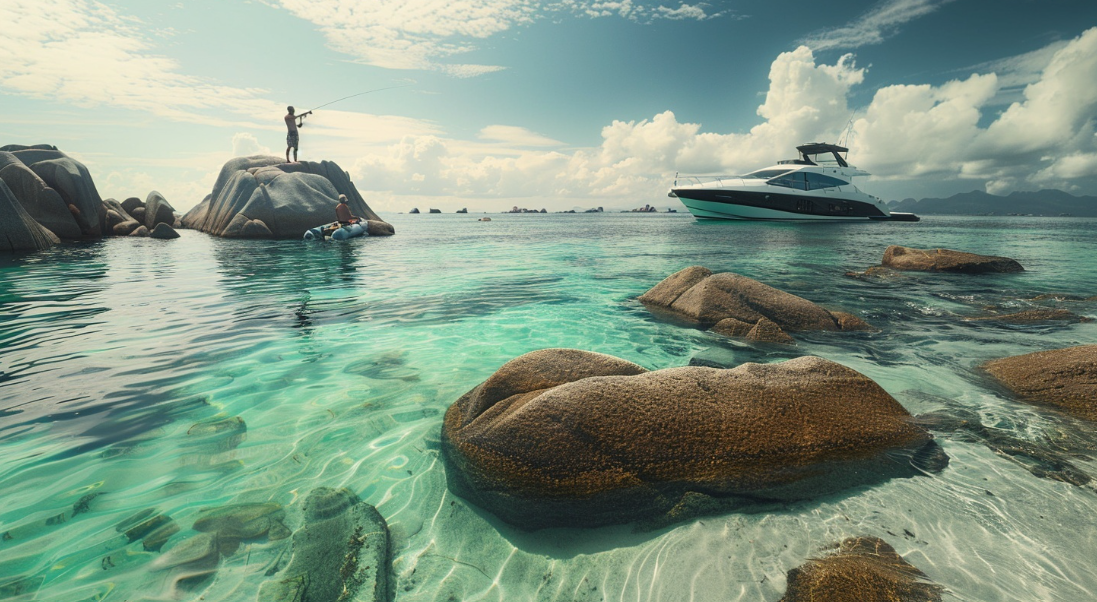
Few places match what the Seychelles archipelago offers anglers who chase fish on a fly rod. These 115 islands sit atop vast sand flats, coral shelves, and lagoons largely untouched by commercial pressure. For anyone serious about saltwater fly fishing, this is the destination that keeps landing at the top of every shortlist.
What Fly Fishing Is and How It Works in Seychelles
Fly fishing differs from conventional angling in one fundamental way: the angler uses a near-weightless artificial fly propelled by the mass of a specialized line. In Seychelles, that technique gets applied to warm-water fishing across shallow marine terrain—sand flats, turtle grass beds, and lagoon margins where fish cruise in water no deeper than your shin.
Fly Fishing in a Tropical Marine Environment
Tropical flats fishing here demands a different skill set than freshwater work. Wind is constant. Fish spook fast in crystal-clear lagoons, and you often get one shot before a bonefish bolts. Technical casting matters more than almost anywhere else. Fly fishing in Seychelles means reading tide, light, and bottom structure simultaneously while managing a 9-weight rod in gusting trade winds.
Legal Status of Fly Fishing in Seychelles
The government takes marine conservation seriously. Protected marine zones limit certain methods, but fly fishing remains permitted across most flats—partly because it’s low-impact, and partly because the islands cultivated a reputation as a premier catch-and-release destination. Permits are required for some outer atolls, so visiting anglers should confirm access rules before heading out.
Catch-and-Release Rules and Environmental Ethics
Catch and release practices aren’t just encouraged here. On many atolls, they’re mandatory. Barbless hooks, quick handling, and proper revival techniques are standard protocol. The best of Seychelles fly fishing depends on this conservation ethic continuing.
Fish Species Targeted by Fly Fishing in Seychelles
Species diversity is staggering. The Indian Ocean fishing grounds around the Seychelles hold dozens of fly-catchable species, but a handful dominate the conversation.
Bonefish, Giant Trevally, and Permit
Bonefish flats spread across nearly every atoll. These fish tail in skinny water, feeding on crabs and shrimp. Giant trevally pursuit is something else entirely—GTs are aggressive, powerful, and can destroy tackle in seconds. Permit fishing rounds out the trio. Permits are maddeningly selective, and landing one on fly here remains a genuine achievement.
Milkfish and Other Challenging Species
Milkfish opportunities draw a specific type of angler—the kind who doesn’t mind failing repeatedly. These plankton feeders school in calm lagoon environments and rarely take traditional flies. Triggerfish, bluefin trevally, and various grouper species also feature in the daily catch log, turning any Seychelles fly fishing trip into an unpredictable mix of targets.
Fish Behavior in Flats and Lagoons
Tropical fish species behave according to tide, temperature, and light—sight fishing conditions peak during early morning sessions and late afternoon when polarized glasses cut glare. Tide-dependent fishing governs almost every decision a guide makes.
Where Fly Fishing Takes Place in Seychelles
Geography shapes everything. The archipelago stretches across a massive ocean area, and the fishing terrain varies enormously between island groups.
Shallow Flats, Lagoons, and Reef Edges
Shallow flats form the primary battlefield. Ankle-to-knee-deep water over white sand is where most encounters happen. Coral reef edges serve as transition zones where fish stage before moving onto flats with the incoming tide.
Inner Islands vs Outer Islands Fishing Areas
Inner islands—Mahé, Praslin, La Digue—see more boat traffic. Outer island fishing on atolls like Alphonse, Cosmoledo, and Farquhar is a different universe. Unpressured waters, vast flats systems, and fish that haven’t learned to fear a fly line. These remote fishing destinations draw serious anglers, and for the best fly fishing Seychelles experiences, the outer atolls dominate.
Remote Locations Not Reachable From Shore
Many of the finest flats sit on atolls with no permanent population. Remote sandbanks that emerge at low tide create temporary wading platforms surrounded by fish—but reaching them requires a boat. Some of the most productive spots involve offshore-to-flats transitions during specific tide windows, shaping entire Seychelles fly fishing trips around vessel-based mobility.
Fly Fishing From a Private Yacht
Boat access isn’t optional in the Seychelles. It’s the foundation of any serious operation across these islands.
Why Yachts Are Used for Fly Fishing in Seychelles
Distances between productive fishing grounds make yacht-supported fishing trips the standard approach. A private yacht serves as a floating accommodation, transport hub, and staging platform. Seychelles fly fishing packages from most operators revolve around vessel logistics—anchoring near productive atolls overnight, then deploying skiffs at first light.
Accessing Remote Flats and Sandbanks by Boat
Access by private boat opens territory that doesn’t exist for shore-based anglers. Pristine marine ecosystems on outer atolls remain reachable only by sea. A charter vessel drops anchor in protected water, and anglers transfer to smaller craft. This layered approach defines the liveaboard fishing experience and makes multi-day fishing routes across scattered atolls practical.
Fishing Directly From Skiffs and Dinghies
The real fishing happens from poling skiffs. A guide stands on an elevated platform, pushing the boat silently across the flat while the angler stands on the bow, rod ready. Light tackle fishing from a skiff is the purest form of flats work—quiet, precise, and dependent on teamwork. Seychelles fly fishing guides who pole these skiffs know every contour of their home flats.
How Yacht Mobility Follows Tides and Fish Movement
Fish don’t stay put. Tides flood and drain flats on a schedule, and the yacht moves accordingly. Fishing-focused yacht charters build daily plans around tidal charts and wind forecasts. That mobility separates a good trip from an extraordinary one.
Differences Between Shore Fishing and Yacht-Based Fishing
Shore fishing limits you to walkable territory—meaning you miss 90% of available water. Seychelles fly fishing at its best involves moving between atolls, chasing seasonal concentrations, and hitting low-pressure fishing areas unreachable on foot. Luxury fishing expeditions combine this mobility with comfort, making week-long adventure fishing travel sustainable rather than grueling.
Best Seasons for Fly Fishing in Seychelles
Timing matters—a lot. The islands sit close enough to the equator that seasons relate more to wind patterns than temperature.
Seasonal Fish Presence and Migration
Bonefish hold year-round, but Seychelles fly fishing costs and availability fluctuate with seasonal demand—giant trevally numbers peak when baitfish migrations draw them onto the flats. Experienced fishing guides time their seasons around these patterns, and the best operators book out months in advance.
How Seasons Affect Flats, Lagoons, and Visibility
The northwest monsoon (October through March) brings calmer seas. Visibility on the flats tends to peak during these months. The southeast monsoon stirs heavier winds and occasionally muddies lagoons—which can actually improve fishing, since GTs feed more aggressively in reduced visibility. Fly fishing in the Seychelles during the shoulder months often offers a balance of manageable weather and solid fish numbers.
Seasonal Advantages of Yacht-Based Access
A yacht lets you dodge bad weather by relocating to protected water. During the southeast monsoon, north-facing flats stay fishable while south-facing ones get hammered. CharterClick coordinates yacht rentals that match seasonal fishing demands, connecting anglers with vessels positioned for optimal access to productive grounds.
Fly Fishing Gear and Equipment
Gear selection for Seychelles saltwater flats follows specific rules. The marine environment punishes shortcuts.
Fly Rods and Reels for Saltwater Flats
A 9-weight rod handles most bonefish and permit situations. For GTs, step up to a 12-weight. Reels require sealed drag systems rated for saltwater—corrosion can damage gear quickly. Most anglers bring three or four rods rigged for different species to avoid re-rigging on the flat.
Fly Lines, Leaders, and Backing
Tropical-rated fly lines resist the heat that turns standard lines into limp spaghetti. Leaders range from 12-pound fluorocarbon for bonefish to 100-pound shock tippets for GT. Backing capacity matters—a hot bonefish will pull 150 yards, and a GT can empty a reel.
Common Fly Patterns Used in Seychelles
Fly selection breaks down by target species. Essential patterns include:
- Gotcha and Crazy Charlie variations for bonefish in sizes 4–8
- Large brushy patterns (Semper San, Bruiser) in size 2/0 for giant trevally
- Crab patterns in tan and olive for permit on turtle grass flats
- Small semi-translucent flies for milkfish, imitating algae clusters
- Clouser-style streamers for bluefin trevally and prospecting along reef edges
Pack more than you think you’ll need. Coral eats flies. Fish straighten hooks. The ocean wins plenty of rounds.
Gear Considerations When Fishing From a Yacht
Rod tubes protect blanks during transit. A freshwater rinse station on deck extends reel life—salt residue destroys drag systems if left unchecked. CharterClick helps anglers coordinate yacht charters by providing rod storage, rinse facilities, and skiff deployment setups so gear stays organized throughout a full multi-day expedition. Deck space for rigging and drying flies becomes genuinely important over six or seven days on the water.