Desroches Island Guide - Access, Diving and Fishing
Aug 19, 2026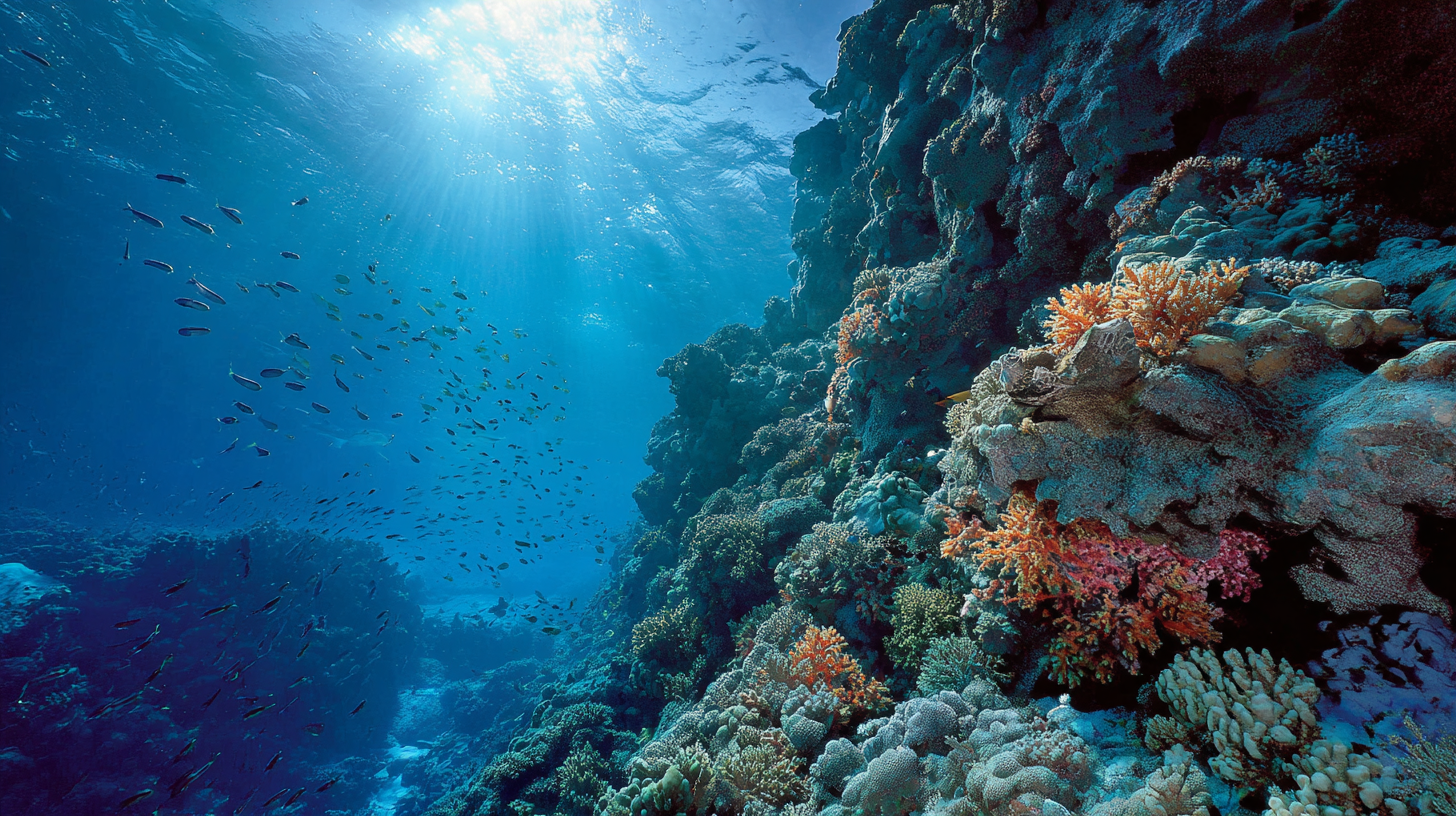
Desroches Island is a flat coral island in the Amirantes group of the Seychelles Outer Islands, about 230 km southwest of Mahé, with a single resort and a single airstrip. Access is limited to two routes: a light-aircraft flight from Mahé or arrival by private yacht, since no ferry or public boat service exists. This guide covers both access routes, the seasonal windows that affect them, the accommodation categories available, the structure of a trip budget, and how Desroches compares with the other private islands in the Seychelles.
What Is Desroches Island
Desroches is the largest island in the Amirantes, roughly 5.5 km long and up to about 1 km wide, covering close to 4 km² and ringed by 13 to 14 km of continuous fine sand.
The island sits on the western edge of a submerged atoll about 20 km across, separated from the main Amirantes ridge by water up to 1,740 metres deep. Conservation is managed by the Island Conservation Society, and the airstrip and island operations are run by the Islands Development Company.
|
Parameter |
Figure |
|
Island group |
Amirantes, Seychelles Outer Islands |
|
Distance from Mahé |
~230 km (~124 nautical miles) southwest |
|
Length / width |
~5.5 km / up to ~1.1 km |
|
Land area |
~4 km² |
|
Coastline |
13 to 14 km, almost entirely sand |
|
Airport |
Desroches Airport (IATA: DES, ICAO: FSDR) |
|
Airstrip length |
~1.3 km, dividing the resort side from the residences |
|
Resorts |
One: Four Seasons Resort Seychelles at Desroches Island |
|
Resident population |
~100 |
|
Highest elevation |
~13 m |
The island produced copra through the plantation era and carried the English chart name Wood Island for its Pisonia forest. Four Seasons opened here in 2018 after a full redevelopment of the earlier island lodge, which is why almost all published visitor information dates from that year forward.
Desroches belongs to a different category of Seychelles island than the ones most visitors see. Mahé, Praslin and La Digue are granite islands with roads, villages and multiple hotels. The Amirantes are low coral formations with no public transport, no shops and, in most cases, no accommodation at all. Desroches carries the only hotel in the group.
How to Get to Desroches Island
Desroches is reached by a light-aircraft flight from Seychelles International Airport on Mahé, taking 35 to 40 minutes. There is no ferry, no scheduled boat and no road connection of any kind.
The journey has three parts: an international flight into Mahé, the short domestic hop to the Desroches airstrip, and a ground transfer of a few minutes to the resort. The domestic leg is arranged as part of the stay rather than bought separately, so flight dates and room nights are fixed together.
Allow a buffer between the international arrival and the onward flight. Long-haul arrivals often land too late in the day to connect, and a night on Mahé at one or both ends is a common part of the itinerary.
The flight suits travelers whose destination is Desroches itself. If the goal is to see more of the Amirantes than one island, the aircraft cannot deliver that, because none of the neighboring atolls accepts visitors by air. That leaves a private yacht as the only route to the rest of the group.
Reaching Desroches and the Amirantes by Private Yacht
A yacht charter is the only practical way to see the Amirantes beyond Desroches, since the surrounding atolls have no accommodation, no flights and no visitor infrastructure. On a charter, Desroches functions as one waypoint on a route rather than the entire trip.
The passage from Mahé covers roughly 124 to 130 nautical miles of open water. A cruising catamaran at typical passage speed makes that an overnight run; a fast motor yacht covers it inside a day. Departures are normally staged from Eden Island Marina on Mahé.
Large vessels enter the lagoon through a deep channel about 12 km northwest of the island, where charted depths allow safe passage; the lagoon averages around 25 metres inside. Landings on the beach are made by tender. Shore access on the Seychelles outer islands is regulated, and the resort facilities on the southwest side of the island serve Four Seasons guests, so plan shore time around the island rather than around the hotel.
A charter route makes sense when specific conditions apply:
- The group is large enough to fill several villas at a resort, which changes the arithmetic of a single vessel rate.
- The trip runs seven days or longer, which is the minimum to justify the passage time.
- Diving or fly fishing is the priority, and access to Poivre, St Joseph and D'Arros matters more than a single reef system.
- Several islands in one trip is the point, rather than one base.
Vessel type drives most of these conditions. A sailing catamaran suits groups that want time on the water and shallow-draft anchorages; a motor yacht cuts the Mahé passage to under a day and suits a party less comfortable with an overnight run. Both sit within the range of a standard Seychelles yacht charter.
The charter option stops making sense in the opposite conditions: a stay of three or four nights, a party sensitive to open-water passages, or a trip built around spa treatments, restaurants and land-based service. In those cases the flight and the resort are the better fit.
As a route reference, Desroches sits at the eastern edge of the group. Poivre lies southwest, D'Arros and the St Joseph Atoll to the west, and Alphonse roughly 87 km further south. Planning the sequence and the passage windows is covered in more detail in our Seychelles sailing itinerary guide, and the individual atolls are described in the Amirantes islands overview.
Best Time to Visit Desroches Island
April, May, October and November give the most reliable conditions, because these are the transition months between the two monsoons, when wind drops, the sea flattens and underwater visibility peaks.
The Seychelles runs on two wind regimes rather than four seasons. The northwest monsoon holds from November through March, bringing warmer air, higher humidity and heavier rainfall in short bursts. The southeast trades run from May through September, producing steadier wind, drier air and choppier water on exposed coasts.
|
Period |
Wind |
Sea state |
Rainfall |
Notes for Desroches |
|
Nov to Mar |
Northwest monsoon, light to moderate |
Generally calm on the southeast side |
Highest, in short heavy showers |
Strong diving window; peak holiday demand late Dec |
|
Apr |
Transitional, minimal |
Flattest of the year |
Low |
Best all-round conditions |
|
May to Sep |
Southeast trades, steady and stronger |
Choppy on windward coasts |
Lowest |
Seaweed accumulates on exposed beaches; quietest period |
|
Oct to Nov |
Transitional, minimal |
Very calm |
Low to moderate |
Second-best window, less busy than April |
Water temperature stays between 26 and 30°C year-round, and visibility on the reef reaches around 30 metres in good conditions.
The activity seasons do not line up with each other. Diving conditions around the atoll are strongest from November through May. Saltwater fly fishing across the Seychelles outer islands runs a longer season, broadly September through May. Green and hawksbill turtles nest on the south and northeast coasts, on a schedule that overlaps only partly with either.
For a yacht passage, the transitional months matter more than they do for a flight. April, October and November give the calmest crossing from Mahé, while the June to August stretch of the southeast trades produces the roughest open-water conditions of the year. Month-by-month detail is in our Seychelles climate guide.
Things to Do on Desroches Island
Desroches supports a narrow set of activities done well: diving on an atoll wall, saltwater fly fishing, cycling as the primary means of getting around, and wildlife viewing centered on free-roaming Aldabra giant tortoises. The island has no hiking terrain, no waterfalls and no interior worth exploring on foot.
Diving and Snorkeling
The island has 18 classified dive sites, ranging from caverns and tunnels to sinkholes and reef walls. The signature site is the Desroches Drop on the southeast slope, the sheerest wall on the atoll, where depth increases past 1,000 metres within two to three kilometres of leaving the reef. Ocean-facing fringing reef sits shallow at three to seven metres, which keeps snorkeling and entry-level diving viable at the same sites. Common sightings include hawksbill and green turtles, blacktip reef sharks, rays and over 150 reef fish species.
Fly Fishing
Desroches is one of the few Seychelles atolls with bluewater fishing within sight of land, a result of the 1,300 metre Amirantes Trench that separates it from Poivre and St Joseph and drives constant nutrient flow. Target species include bonefish, giant trevally, bluefin trevally, milkfish, sailfish and yellowfin tuna. The bonefish and permit flats are strongest at St Joseph and Poivre, reached as a day trip, which is why the fishing offer here overlaps directly with the yacht charter option.
Cycling the Island
Bicycles come with every villa and function as the main transport. The full island is roughly 5.5 km end to end on packed sand and coral tracks, crossing the airstrip to reach the island village and the northern beaches. A relaxed circuit takes most of a morning.
Wildlife and Conservation
Aldabra giant tortoises roam freely across the island, with a sanctuary and a Discovery Centre run alongside the Island Conservation Society. The long encircling beach is nationally significant for green and hawksbill turtle nesting, concentrated on the south and northeast coasts. Seabird species recorded here include white terns and wedge-tailed shearwaters.
Beaches
The 13 to 14 km of shoreline is effectively continuous, and with 71 keys on the island, most stretches are empty for most of the day. Sunset Beach on the west side carries the main resort building and the calmest swimming water. Coral Beach faces south. Madame Zabre is the best-known of the beaches away from the resort core. North of the airstrip, the beaches see almost no foot traffic at all.
What Drives the Cost of a Trip to Desroches Island
A Desroches budget is built from separate components rather than a single inclusive rate, and the domestic flight plus the board plan are the two that surprise people most often.
|
Component |
How it is billed |
Note |
|
International flight to Mahé |
Separate |
Varies by origin and season |
|
Mahé to Desroches flight |
Separate, per person |
A real line item, not a hotel transfer |
|
Villa |
Per night, per villa |
Category and season drive the spread |
|
Meals |
Separate board plan |
No alternative dining exists on the island |
|
Bicycles |
Included with the villa |
Main transport around the island |
|
Diving |
Per dive or as a package |
Equipment included |
|
Fly fishing |
Separate |
Day trips to St Joseph and Poivre priced apart |
|
Spa, private chef, attendant |
Separate |
Chef and attendant available for residences and the Desroches Suite |
|
Drinks |
Separate unless booked on an inclusive plan |
Everything arrives by air or sea |
Four items are underestimated more than the rest: the domestic flight, which people mentally file as a transfer; the board plan, since there is nowhere else to eat; drinks, on a property supplied entirely from off the island; and activities, which are priced individually rather than bundled into the stay.
A yacht charter reorganizes the same list. The vessel replaces both the villa and the domestic flight, meals and activities run from the boat, and the cost driver becomes charter length and group size rather than villa category and passenger count.
Desroches vs Other Private Islands in Seychelles
Seychelles private islands differ on five parameters that matter for the decision: distance from Mahé, access method, number of properties, activity profile and cost tier. Landscape type is the sixth, splitting the granite inner islands from the flat coral outer ones.
|
Island |
Distance from Mahé |
Access |
Properties |
Profile |
Cost tier |
|
Desroches |
~230 km SW |
Short flight, or private yacht |
1 resort, 71 keys |
Atoll diving, fly fishing, cycling |
Upper |
|
Alphonse |
~400 km SW |
Longer flight, limited days |
1 lodge |
World-class fly fishing at St François |
Upper, sold per person inclusive |
|
North Island |
~42 km N |
Helicopter |
1 lodge, 11 villas |
Granite scenery, rewilding |
Highest in Seychelles |
|
Denis |
~85 km N |
Short flight |
1 lodge |
Coral island, birdlife, deep-sea fishing |
Mid |
|
Bird |
~100 km N |
Short flight |
1 lodge |
Sooty tern colony, low-key and informal |
Most accessible of the group |
Alphonse is the closest match to Desroches and the comparison most people actually need. Both are flat coral islands in the outer group with a single property and a fishing and diving profile. Alphonse sits almost twice as far out, runs a more restricted flight schedule, and offers the stronger fly fishing of the two at St François Atoll. Desroches is easier to reach, has the more developed resort product, and works better for a party where not everyone is there to fish.
North Island differs on almost every axis. It is granite, not coral; it is 42 km from Mahé rather than 230; it takes 11 villas rather than 71; and access is by helicopter. It occupies the top of the Seychelles range, and the landscape reads as forested hills and boulder beaches rather than flat sand and coconut palms.
Access method determines what can be combined. North Island, Denis and Bird sit within inner-island cruising range and combine with a Mahé and Praslin itinerary without difficulty. Desroches and Alphonse sit in the outer group, where the only vessel that reaches them is a yacht charter with the range and the days to spare, and where the atolls between them cannot be visited any other way.
The real fork is between a resort stay and a charter route rather than between islands. A week in one villa on Desroches and a route covering Desroches, Poivre and St Joseph are different trips, and the choice turns on group size, appetite for passage time and whether seeing more than one atoll matters. Our yacht charter services cover the vessel types and route lengths that make the second option workable.