Anse Source d’Argent, Seychelles — Beach Guide, Access, Best Time & Travel Tips
Apr 16, 2026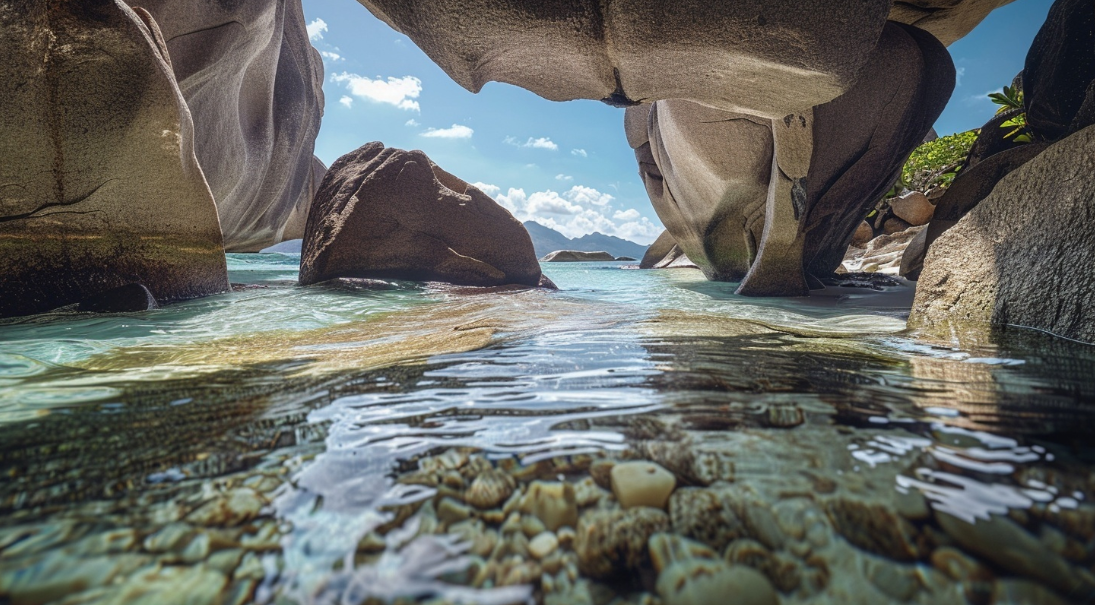
Anse Source d'Argent is a beach on the southwestern coast of La Digue Island in the Seychelles, accessed through the gated L'Union Estate property. The beach stretches roughly 1,100 meters along a shallow lagoon that a protective coral reef keeps calm year-round, and its defining visual feature is the line of weathered pink-gray granite boulders that frame the shoreline. Travelers reach the beach after paying an entrance fee at the L'Union Estate gate and walking or cycling through the former coconut plantation. Anse Source d'Argent ranks among the most photographed beaches in the world, appeared in Bacardi rum advertisements during the 1990s, and served as a filming location for motion pictures including Castaway (1986) and Crusoe (1988).
What Is Anse Source d'Argent
Anse Source d'Argent is a public beach on the southwest coast of La Digue, one of the Inner Islands of the Seychelles archipelago. Public access passes through the privately managed L'Union Estate, which collects an entrance fee at its gate. The beach extends along a protected lagoon where massive granite formations rise directly from the sand and meet the water.
Quick Facts
- Location — Southwest coast of La Digue
- Island — La Digue, Inner Islands of the Seychelles
- Access — Entry gate at L'Union Estate, south of La Passe village
- Entry fee — Approximately 150 SCR per adult per day, payable at the gate
- Length — Approximately 1,100 meters
- Width — Approximately 20 meters at average tide
- Best time — Early morning before 10 00 or late afternoon after 15 00
- Tides — Deep-water swimming only at high tide; water recedes significantly at low tide
- Facilities — Public restrooms, parking, restaurant at entrance, fruit stands along the beach
- Swimming — Calm and shallow, protected by an offshore reef
- Snorkeling — Limited inside the reef; visibility moderate at best
- Family-friendly — Yes, shallow water and natural shade available
- Yacht access — Anchor off La Passe and tender ashore; no direct marina at the beach
The beach consists of three natural elements. White coral sand forms the shoreline. A shallow turquoise lagoon, sheltered by an offshore coral reef, covers most of the swimmable area. Clusters of rounded granite boulders, weathered into soft pink and ochre shades, punctuate the sand and continue into the water. The offshore reef absorbs most of the open-ocean swell before it reaches the beach, which produces calm conditions for most of the year.
Anse Source d'Argent holds a durable position in international rankings of the world's finest beaches. Outlets including CNN Travel, The Times, and Lonely Planet have featured it in various "best beaches" lists, and the Seychelles Tourism Board describes it as the most photographed beach in the country. TripAdvisor user rankings consistently place it in the top tier of La Digue attractions.
The beach measures roughly 1,100 meters end to end and averages about 20 meters in width at mid-tide. The sand is fine and compact rather than loose, which makes walking easy. At very high tide, parts of the beach become submerged, and the usable dry area shrinks for several hours around the daily high-water mark.
Where Anse Source d'Argent Is Located
Anse Source d'Argent sits on the southwestern coastline of La Digue, approximately 2 kilometers south of the main ferry dock at La Passe. The beach lies within the boundaries of L'Union Estate, a privately owned property that includes a former coconut and vanilla plantation, a giant tortoise enclosure, and the beach itself.
The standard visitor route starts at La Passe, the only settlement on La Digue with a pier. From there, travelers head south along the coastal road by bicycle or on foot, passing the island's small commercial district and the Anse Union area before reaching the L'Union Estate entrance gate on the right.
Two smaller beaches flank Anse Source d'Argent and share the same granite-and-lagoon landscape. Anse Pierrot lies immediately to the south, accessible on foot by walking past the last boulders at the far end of Anse Source d'Argent. Anse Union sits to the north, between the beach and La Passe village. South of Anse Pierrot, a harder-to-reach sequence of beaches includes Anse Aux Cèdres, Anse Bonnet Carré, and Anse Marron.
The beach coordinates fall at approximately 4.3742° S, 55.8236° E. From La Digue Jetty to the L'Union Estate gate, the distance is 1.8 to 2 kilometers, depending on the route chosen. Once inside the estate, a signposted path leads another 300 to 400 meters through coconut palms to the beach entrance.
How to Get to Anse Source d'Argent
Anse Source d'Argent is reached through the L'Union Estate gate on La Digue. Travelers first arrive on La Digue by ferry from Mahé or Praslin or by private yacht, then cover the final stretch from La Passe pier to the estate entrance by bicycle, on foot, or by electric buggy.
Getting to La Digue from Mahé
Mahé-to-La Digue travel is handled by the Cat Cocos fast ferry, which operates the Mahé–Praslin–La Digue route several times daily. Total travel time from Mahé to La Digue runs approximately 1 hour 30 minutes to 1 hour 45 minutes, depending on the connection at Praslin. One-way adult fares typically range from 60 to 75 euros, with reductions for children. Reservations are recommended during the peak season of December–January and July–August.
Getting to La Digue from Praslin
The Praslin-to-La Digue crossing is operated by Inter Island Ferry Pty Ltd on schooner-style vessels and takes approximately 15 minutes. Departures leave Baie Sainte Anne on Praslin and arrive at La Passe on La Digue. The service runs every 60 to 90 minutes throughout the day, with the last return typically around 17 30. One-way adult fares are in the 15-20 euro range.
From La Digue Pier to the Beach
From La Passe pier to the L'Union Estate entrance, the distance is about 2 kilometers along a flat, paved coastal road. The most common mode of transport is a bicycle, rented near the pier for roughly 150 SCR per day. Walking takes 25 to 30 minutes. Electric buggies and taxi-style golf carts are available for travelers who prefer not to cycle, and a one-way ride to the gate usually costs 300-500 SCR.
Inside the estate, visitors pay the entrance fee at the gate and then continue another 5 to 10 minutes on foot through the plantation grounds to reach the beach itself. Bicycles can be parked at racks near the entrance or walked through.
Arriving by Private Yacht or Charter
Yacht charters and private boats anchor in the roadstead off La Passe and transfer passengers ashore by tender, since La Digue has no marina with deep-water berths and no direct docking at Anse Source d'Argent itself. Water depth near the pier runs 3 to 5 meters and accommodates most vessels up to about 80 feet.
Two charter formats work for a visit to Anse Source d'Argent. A day charter departs Mahé or Praslin in the morning, spends 4 to 6 hours off La Digue, and returns the same evening. A multi-day itinerary anchors overnight in La Digue waters and uses a full day for the beach, the L'Union Estate grounds, and the adjacent Anse Pierrot. Seychelles-based operators such as CharterClick arrange both formats as part of Mahé–Praslin–La Digue routes. After coming ashore at La Passe, passengers follow the same bicycle or buggy route to L'Union Estate as ferry arrivals.
Combining Anse Source d'Argent with Island-Hopping
Anse Source d'Argent is typically a stop on a multi-island Seychelles itinerary that covers Mahé, Praslin, La Digue, and the smaller islands around them. Island-hopping schedules are built around ferry connections or private yacht routes, and the beach anchors most La Digue segments of those routes.
Day Charter from Mahé or Praslin
A day charter from Mahé reaches the waters off La Digue in about 2 hours each way under power, which leaves 4 to 5 hours near the island. From Praslin the crossing shortens to roughly 45 minutes, which expands the onshore window to 6 or 7 hours. Day charters often pair Anse Source d'Argent with a snorkeling stop near Coco Island on the return leg.
Multi-Day Yacht Itineraries That Include La Digue
Three-day Seychelles charters typically cover Mahé–Praslin–La Digue with one overnight anchored off La Digue and a half-day at Anse Source d'Argent. Five-day itineraries add Curieuse and the Sister Islands. Seven-day itineraries extend north to Aride, Cousin, and the Félicité group, with Anse Source d'Argent placed as a mid-route highlight.
Combining Anse Source d'Argent with Nearby Snorkeling Sites
Anse Source d'Argent pairs naturally with Coco Island Marine National Park, located about 5 kilometers northeast of La Digue, and with St. Pierre Islet, 3 kilometers offshore from Praslin. Both sites offer deeper water and richer reef coverage than the lagoon at Anse Source d'Argent. A typical yacht day assigns the morning to snorkeling at either site and the afternoon to the beach.
Charter bookings for island-hopping routes that include Anse Source d'Argent are offered by Seychelles-based operators, including CharterClick, in day, bareboat, and skippered multi-day formats.
Best Time to Visit Anse Source d'Argent
The two quietest windows for visiting are before 10 00 in the morning and after 15 00 in the afternoon. The tide governs whether deep-water swimming is possible and how much of the sand is exposed. The southeast monsoon from May through September brings cooler, breezier weather and occasional seaweed deposits, while the northwest monsoon from November through March delivers calmer seas and warmer temperatures.
Tides at Anse Source d'Argent
At low tide, the lagoon drains to ankle- or knee-deep across most of its width, which makes proper swimming impossible and exposes rocks and coral fragments near the shoreline. At high tide, the water reaches chest-deep in the deeper pockets of the lagoon and covers part of the usable sand, reducing the dry-beach area by several meters. Tide tables for La Digue are published by the Seychelles Meteorological Authority and should be consulted when planning photography, snorkeling, or swimming sessions.
Best Hours of the Day
Visitor numbers peak between 10 00 and 17 00, once day-trippers from Praslin and Mahé have arrived. Early-morning arrivals before 10 00 have the beach almost to themselves and benefit from softer, warm-toned eastern light on the granite. Late-afternoon visitors after 15 00 encounter thinner crowds as ferry passengers head back, and the sun moves into position for a west-facing sunset shot. Sunset on La Digue falls between 18 00 and 18 30 year-round because of the archipelago's proximity to the equator.
Best Season to Visit
The northwest monsoon runs from November through March and produces calm seas, clear water, and light winds; this is the preferred window for photography, snorkeling, and swimming at Anse Source d'Argent. The southeast monsoon runs from May through September and brings stronger winds, rougher seas on La Digue's east coast, and occasional seaweed accumulation on the southwest beaches. April and October are short transitional months with variable weather.
How Long to Spend
A short visit focused on photography and a walk to Anse Pierrot takes about 2 hours. A typical half-day visit, including swimming, snorkeling, and lunch at a nearby restaurant, takes 3 to 4 hours. A full-day stay combined with a walk south toward Anse Marron or a bicycle loop around L'Union Estate takes 6 to 8 hours.
What to Do at Anse Source d'Argent
The primary activities at Anse Source d'Argent are swimming in the reef-protected lagoon, snorkeling inside the reef, photography among the granite boulders, viewing the coastline from the water, walking south toward Anse Pierrot and Anse Marron, and watching the sunset from the west-facing shoreline. Each activity has a preferred tide or time-of-day window.
Swimming
Swimming conditions depend almost entirely on tide level. At high tide, the lagoon reaches depths of 1.5 to 2 meters in the deeper pools and offers calm, reef-protected water suitable for most swimmers. At low tide, the water is often too shallow for proper swimming, and travelers typically wade rather than swim. The reef absorbs most incoming waves, and the undertow is negligible within the lagoon, making the beach safe for children under adult supervision.
Snorkeling
Snorkeling inside the reef is limited by the shallow water. Visibility is typically 3 to 6 meters at high tide and drops further at low tide due to sand disturbance. Fish life includes parrotfish, sergeant majors, butterflyfish, and juveniles that use the lagoon as a nursery. Stronger snorkeling is found at the outer reef, but reaching it requires swimming into deeper water and is not recommended without local guidance. Travelers seeking stronger reef coverage on La Digue usually head to Anse Cocos or take a boat trip to the Coco Island Marine National Park offshore.
Photography
Anse Source d'Argent's photogenic quality comes from the combination of three elements rarely found together: fine white sand, turquoise lagoon water, and large sculpted granite boulders positioned directly at the shoreline. The west-facing orientation produces warm backlighting in late afternoon and silhouetted boulder shapes at sunset. Early-morning light, striking the granite from the east, brings out the pink and ochre mineral tones.
Classic compositions include the wide lagoon-and-boulder shot near the middle of the beach, the narrow passages between boulders in the southern section close to Anse Pierrot, and the single-palm silhouettes visible along the tree line. Wedding and honeymoon photo shoots typically use the southern third of the beach, where the granite formations are most concentrated.
Viewing Anse Source d'Argent from the Water
The offshore view of Anse Source d'Argent opens up on the approach from the southwest, with the granite silhouette recognizable from 300 to 500 meters out. Mid-morning light produces the strongest color contrast among the turquoise water, white sand, and pink-gray granite when viewed from a yacht deck.
The coastal sequence from south to north — Anse Marron, Anse Bonnet Carré, Anse Aux Cèdres, Anse Pierrot, Anse Source d'Argent — gives a continuous line of granite-and-sand bays visible from the water. Photographers on day charters often reserve this stretch for the approach phase before anchoring and coming ashore.
Exploring Beyond the Main Beach
From the southern end of Anse Source d'Argent, a footpath leads through a gap in the boulders to Anse Pierrot, a smaller and quieter beach still inside the L'Union Estate grounds. Continuing south, a rougher trail reaches Anse Aux Cèdres, Anse Bonnet Carré, and finally Anse Marron, one of the most secluded beaches on La Digue, accessible only with a local guide due to tidal rock crossings and unmarked terrain. North of the main entrance, short tracks lead to Anse Union and back toward La Passe village.
Sunset at Anse Source d'Argent
The beach faces due west, which places sunsets directly over the lagoon and through the granite boulders. L'Union Estate typically closes its gate by 17 00, which cuts off access before the actual sunset hour of 18 00 to 18 30. Travelers who want to photograph the sunset should either position themselves near the entrance and exit before closing time, or plan to watch the sunset from another point on La Digue's western coast, such as Anse Severe. Yacht guests anchored off La Passe retain the sunset view from the deck after shore access has ended.
Anse Source d'Argent vs Other Beaches on La Digue
Selection between Anse Source d'Argent and the other main La Digue beaches turns on six practical criteria: location on the island, ease of access, presence of an entry fee, crowd levels, swimming conditions, and the type of traveler each beach suits best.
|
Beach |
Location on La Digue |
Access |
Entry Fee |
Best For |
Crowds |
Swimming Quality |
|
Anse Source d'Argent |
Southwest coast |
L'Union Estate gate, 2 km from La Passe |
~150 SCR |
Photography, families, first-time visitors |
High 10 00–17 00 |
Calm, shallow, tide-dependent |
|
Anse Pierrot |
Southwest, adjacent to Anse Source d'Argent |
Footpath from Anse Source d'Argent |
Included in L'Union fee |
Quieter alternative in the same zone |
Low to medium |
Similar to Anse Source d'Argent |
|
Anse Union |
Southwest, north of L'Union Estate |
Direct road from La Passe |
None |
Quick stops, short-stay travelers |
Low |
Shallow, moderate |
|
Grand Anse |
East coast |
Paved road, 4 km from La Passe |
None |
Space, sunrise, strong swimmers |
Low to medium |
Rough; strong currents May–September |
|
Petite Anse |
East coast, south of Grand Anse |
15-minute trail from Grand Anse |
None |
Seclusion, scenery |
Very low |
Rough; similar to Grand Anse |
|
Anse Cocos |
East coast, south of Petite Anse |
45-minute trail from Grand Anse |
None |
Snorkeling, seclusion, natural rock pools |
Very low |
Rough open water; calm in natural pools |
|
Anse Marron |
South coast |
Guided trek only, 2–3 hours from La Passe |
None, guide fee applies |
Adventure travelers, experienced hikers |
Almost none |
Excellent in tidal pool, rough outside |
Travelers choosing between these beaches can apply the following heuristic. Anse Source d'Argent is the single best choice for first-time visitors, photographers, families with children, and anyone who wants to see the classic Seychelles boulder landscape with minimal effort. Grand Anse and Petite Anse suit travelers who prefer wide, empty beaches and are comfortable with rougher water. Anse Cocos is the preferred option for snorkelers willing to hike. Anse Marron is reserved for experienced adventurers with a guide. Anse Pierrot and Anse Union function as quieter extensions of a visit to Anse Source d'Argent.
Who Anse Source d'Argent Is Best
Anse Source d'Argent suits five main traveler profiles: families with children, photographers and honeymooners, casual snorkelers, day-trip visitors arriving from Mahé or Praslin, and yacht charter guests on island-hopping itineraries. Each profile uses the beach differently and benefits from different time windows.
Families with children benefit from the reef-protected lagoon, the shallow water at mid to high tide, and the availability of restaurants, restrooms, and parking near the entrance. The short walk from the estate gate to the beach is manageable for young children and requires no strenuous effort.
Photographers and honeymooners use Anse Source d'Argent for its granite-and-water compositions and its west-facing exposure. Early-morning visits before 09 00 deliver both soft eastern light and near-empty beaches, which is the combination that professional photo shoots and wedding couples typically seek.
Casual snorkelers can explore the calm lagoon for small reef fish and juvenile species, though serious snorkelers should move on to Anse Cocos, the outer reef of Coco Island Marine National Park, or Curieuse Island off Praslin. The shallow water and low visibility at low tide mean Anse Source d'Argent functions as an entry-level snorkeling site, not a primary one.
Day-trip visitors from Mahé or Praslin can fit Anse Source d'Argent into a half-day La Digue itinerary that includes the ferry crossing, a bicycle rental at La Passe, a stop at L'Union Estate (which also houses a giant tortoise enclosure and a colonial-era copra mill), and time at the beach itself.
Yacht charter guests and island hoppers treat Anse Source d'Argent as the principal La Digue stop on a multi-island itinerary. The beach aligns with standard charter schedules because it fits a half-day visit with low shore logistics — anchor off La Passe, tender ashore, bicycle or buggy to L'Union Estate, several hours on the beach, and back to the yacht before evening.
Anse Source d'Argent suits fewer types of travelers under specific conditions. Strong swimmers who want deep water and open-ocean swell will find the shallow lagoon limiting. Travelers seeking solitude during peak hours in December–January or July–August will encounter consistent crowds and should visit at the early or late fringes of the day. Snorkelers seeking high fish density and full reef coverage will find the conditions too shallow and should choose other sites.